Nadler-Tushman Congruence Model
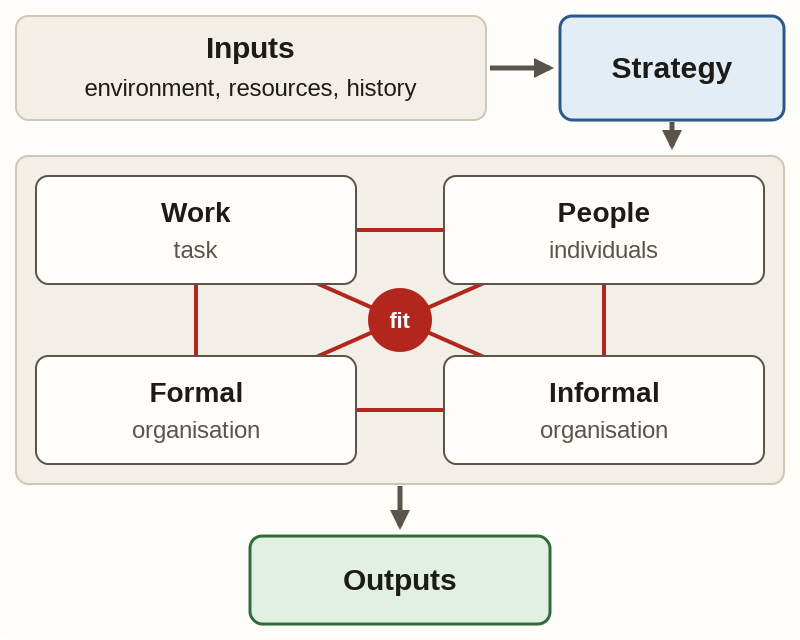
Diagnoses performance by checking how well work, people, formal structure and culture fit together.
Helps with
- parts of the organisation do not fit together
- why performance is below expectations
- people and structure out of step with the work
Use it when
Finding where misfits inside the organisation are hurting results.
The parts
- Inputs: environment, resources, history
- Strategy
- Work (task)
- People (individuals)
- Formal organisation
- Informal organisation
- Outputs
Watch out
Good at spotting misfit at one point in time but static; it says little about how to sequence a change.
Where it comes from
Later versions name the four components work, people, formal organisation and informal organisation (culture); the 1980 paper's wording differs slightly.