EFQM Model
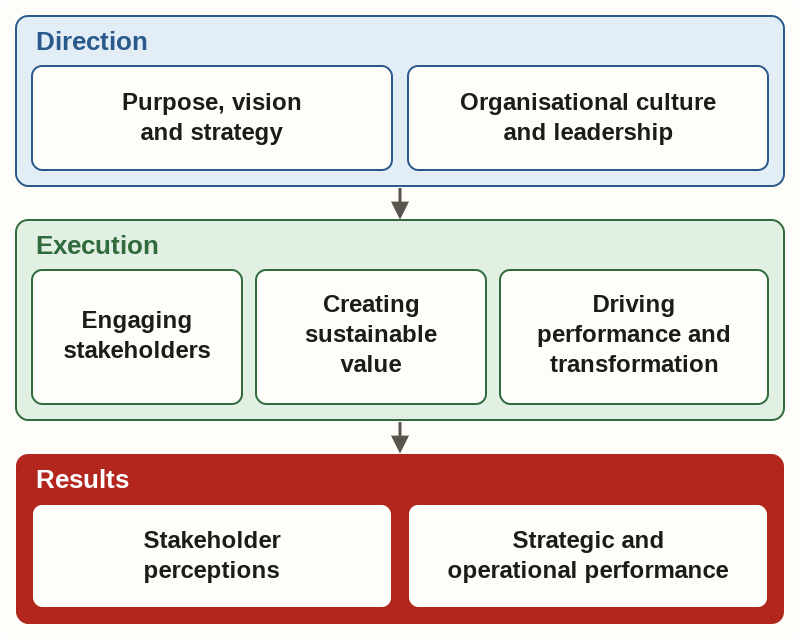
Assesses an organisation by its direction, how it executes its strategy, and the results it achieves.
Helps with
- assessing how well we run the organisation
- preparing for a quality award
- checking our results against our direction
Use it when
Self-assessing an organisation or preparing for an excellence award.
The parts
- Purpose, vision and strategy
- Organisational culture and leadership
- Engaging stakeholders
- Creating sustainable value
- Driving performance and transformation
- Stakeholder perceptions
- Strategic and operational performance
Watch out
Scoring an assessment can become the goal itself, producing paperwork rather than improvement.
Where it comes from
EFQM says the model was first used for the European Quality Award in 1992; it was long called the EFQM Excellence Model, and the current edition groups seven criteria under direction, execution and results in place of the earlier nine.