Kaizen
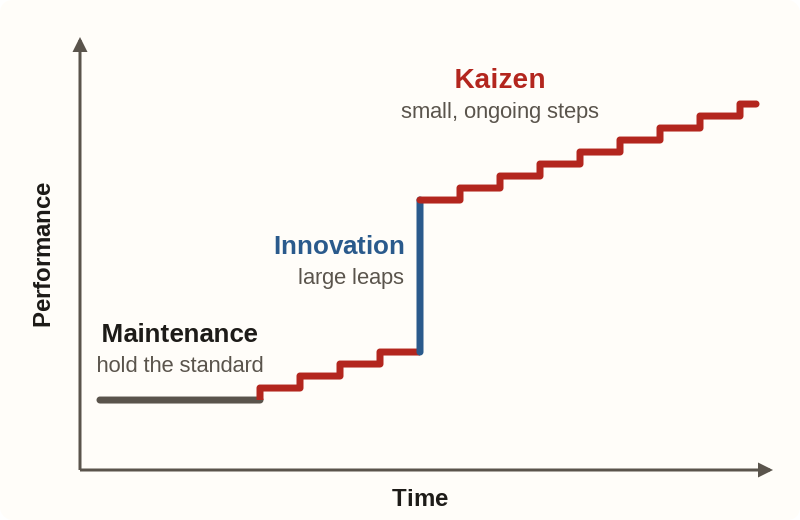
Improves work through small, ongoing, low-cost changes that everyone, from managers to workers, makes.
Helps with
- improvement only happens in big projects
- building a habit of small improvements
- getting everyone involved in improving work
- need ongoing low-cost improvements
Use it when
Building a habit of everyday improvement rather than waiting for big projects.
The parts
- Maintenance (hold the standard)
- Kaizen (small, ongoing steps)
- Innovation (large leaps)
Watch out
Run as a series of one-off 'kaizen events' it loses the daily, everyone-involved habit that is the point.
Where it comes from
Imai did not invent kaizen; his 1986 book described existing Japanese practice and gave it a name in Western management. Tools such as PDCA, 5S and waste removal are often grouped under it but are separate entries here.