Nudge (Choice Architecture)
Steers choices by changing how options are presented, without banning any or changing incentives much.
Helps with
- getting people to make better choices by default
- designing a form so the easy choice is the good one
- improving take-up without banning options
Use it when
Designing a form, process or policy so the easy choice is the good one.
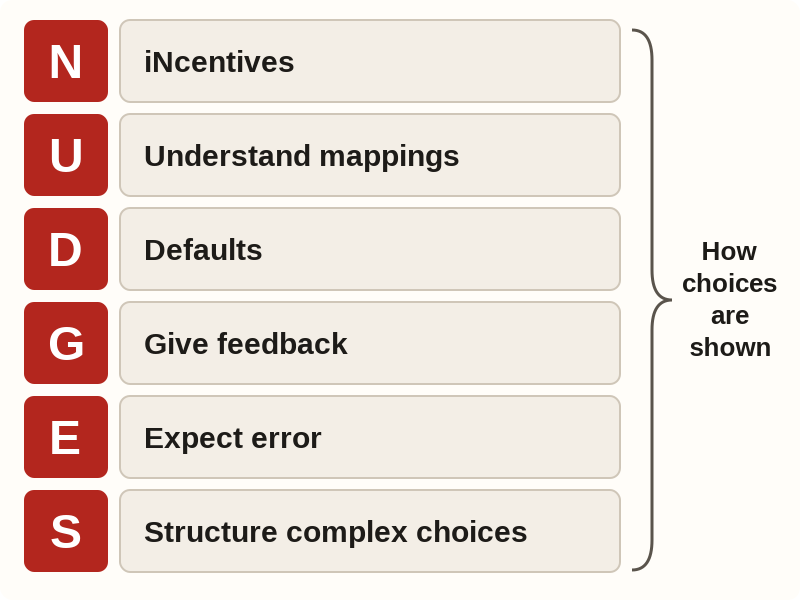
The parts
- iNcentives
- Understand mappings
- Defaults
- Give feedback
- Expect error
- Structure complex choices
Watch out
Effects found in trials often shrink at scale, and nudges that serve the designer rather than the chooser become manipulation.
Where it comes from
Thaler and Sunstein first set out the underlying idea as 'libertarian paternalism' (American Economic Review 93(2), 2003); the 2008 book named nudges and choice architecture, and the six principles spell out NUDGES.