Pareto Principle (80/20)
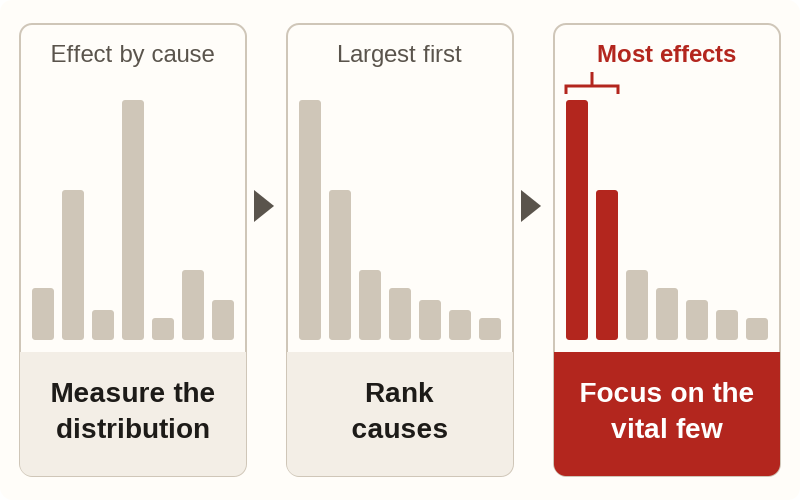
Observes that a minority of causes often drives most effects.
Helps with
- too many problems to tackle at once
- finding where effort will matter most
- which few causes drive most of the trouble
- deciding what to fix first
Use it when
Finding where effort will matter most.
The parts
- Measure the distribution
- Rank causes
- Focus on the vital few
Watch out
80/20 is an illustration, not a law; measure the actual split.
Where it comes from
Pareto studied the distribution of wealth. Juran later wrote that putting Pareto's name on the general 'vital few' principle was his own mistake.