Psychological Safety
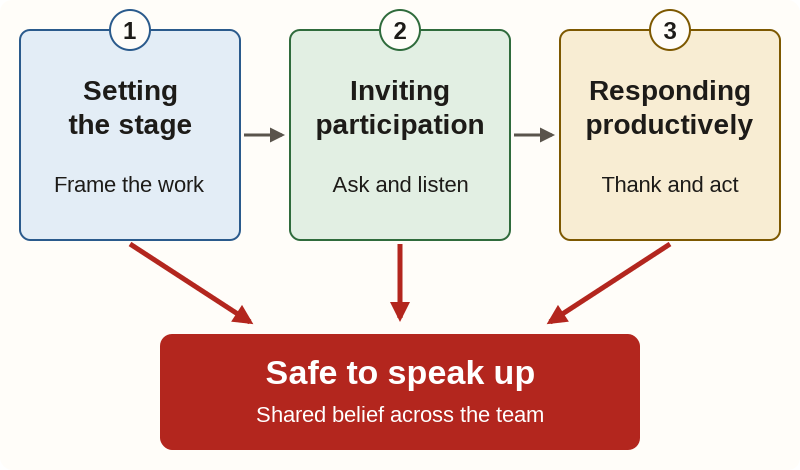
Describes a team's shared belief that it is safe to take interpersonal risks such as speaking up.
Helps with
- team hides mistakes
- people stay quiet in meetings
- staff afraid to speak up
- nobody challenges ideas in our team
Use it when
Working out why a team hides mistakes or stays quiet in meetings.
The parts
- Setting the stage
- Inviting participation
- Responding productively
Watch out
It is not about being comfortable or lowering standards; safety without accountability breeds complacency.
Where it comes from
Schein and Bennis wrote about psychological safety in a 1965 book; Edmondson's 1999 paper defined it at team level, and the three leader steps come from her 2018 book The Fearless Organization.