Scenario
A team that isn't working
Deadlines slip, meetings go quiet and the same arguments keep coming back. Find out why, then decide what to change first.
Say you lead a team of eight. Each person is capable, yet work stalls between them: decisions get reopened, problems surface late, and two people barely speak in meetings. Before you reach for a team-building day or a reshuffle, work out what kind of problem you have. The steps below move from where the team is, through how it behaves, to who does what and how disagreements get handled.
Is this a normal stage, or a real problem?
Start by placing the team on Tuckman's Stages of Group Development. A team that has just formed, merged or changed leader will often go through a rough storming patch, and that friction can be part of finding its feet rather than a sign of failure. If the team has been together for a while and keeps slipping back, that tells you something too. Teams can skip or revisit stages, so use the model to set expectations, not to wait it out. Carry forward a rough sense of whether you are dealing with growing pains or something stuck.
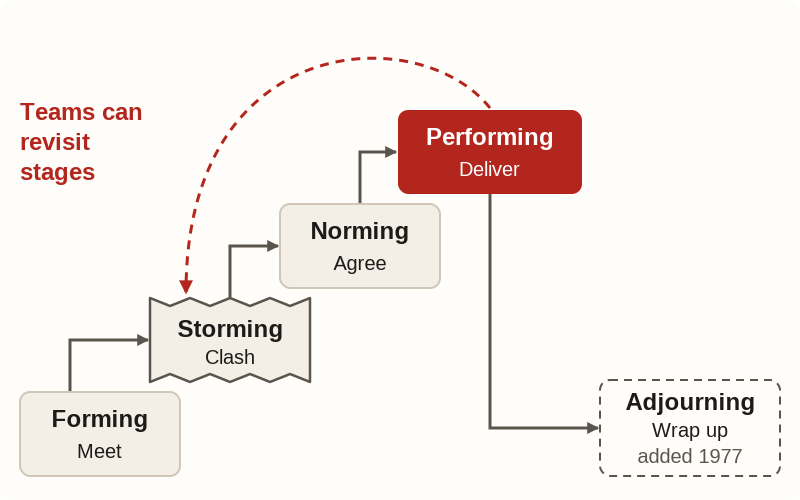
Tuckman's Stages of Group Development
Describes how teams develop through predictable stages.Read the framework →Do people feel able to speak up?
Quiet meetings and late surprises often point to low Psychological Safety: people judge that raising a concern, admitting a mistake or challenging a colleague is not worth the risk. Watch how you respond when someone brings bad news, and whether the same few voices fill every discussion. Inviting participation and responding productively are things you can change this week. Keep the standard high while you do it. What you learn here shapes how openly the team can take part in the next step.
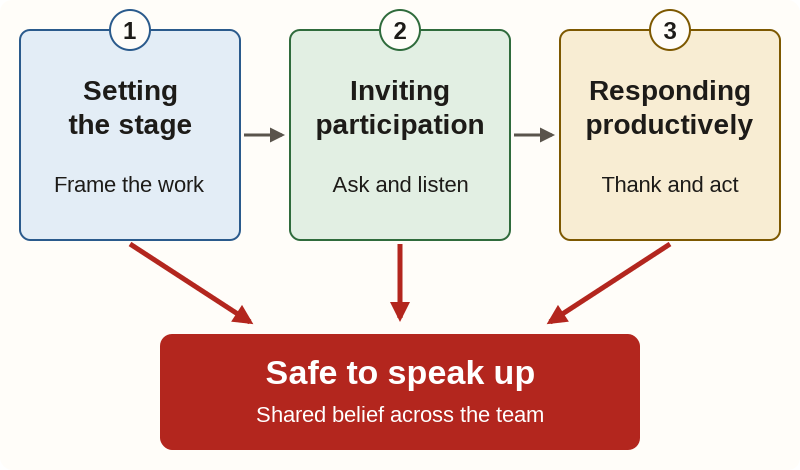
Psychological Safety
Describes a team's shared belief that it is safe to take interpersonal risks such as speaking up.Read the framework →Where exactly does the teamwork break down?
With a feel for how safe people are, use the Five Dysfunctions of a Team as a discussion prompt rather than a verdict. Ask the team where it recognises itself: do people hold back from honest conflict, agree in the room and then not commit, or let each other off when standards slip? Because each layer rests on the one below, a lack of accountability may be a lack of trust. Note the one or two layers the team agrees on; they tell you whether the next fix is about roles or relationships.
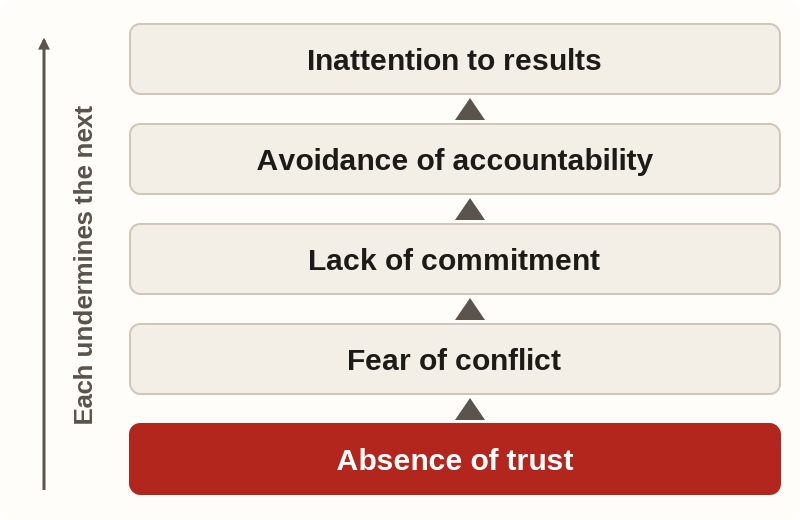
Five Dysfunctions of a Team
Stacks five team failures so each one undermines the next, from absent trust up to ignored results.Read the framework →Who owns what?
Many team problems that look personal are about unclear ownership. Take the handful of pieces of work that keep stalling and map them with a RACI Matrix. You will often find two people who both think they are accountable, or a task nobody is. Agree one Accountable person for each and settle who must be consulted rather than merely informed. This removes a whole class of argument, and leaves the disputes that remain easier to see for what they are.
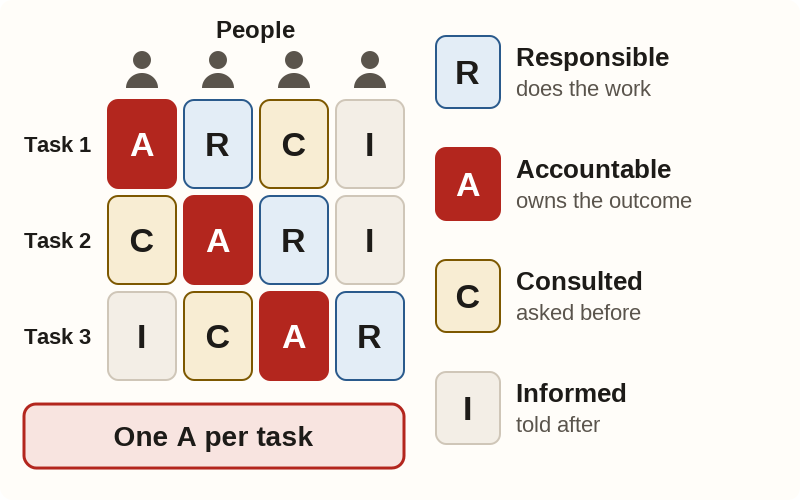
RACI Matrix
Assigns each task's roles to make ownership explicit.Read the framework →Do we have the right mix of contributions?
Once ownership is clear, look at how people contribute. Belbin Team Roles gives you language for gaps and overlaps: a team full of idea generators but no one who finishes, or several strong drivers and nobody who smooths the way. Use the roles as prompts in a conversation, not as fixed labels, and look for ways to cover gaps through pairing or how work is shared out. This often explains recurring clashes, which brings you to the last question.
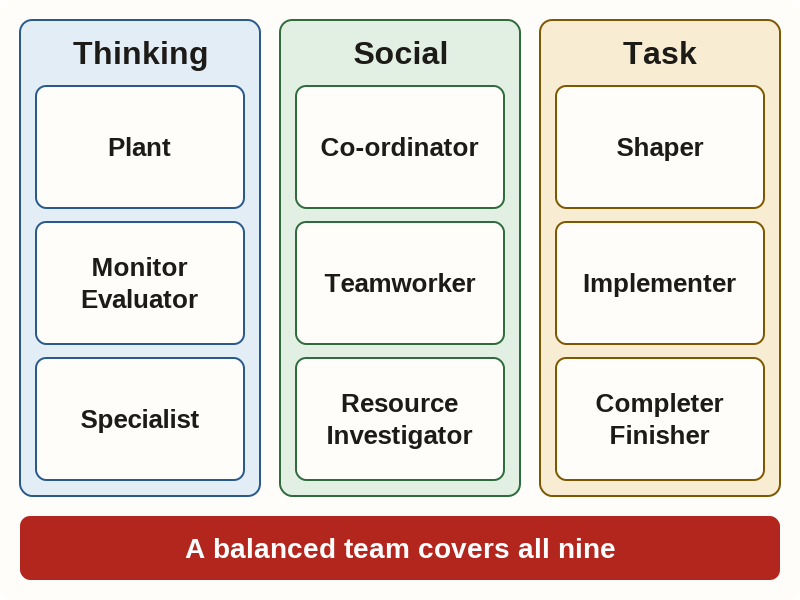
Belbin Team Roles
Identifies nine behavioural roles a balanced team needs, from generating ideas to finishing work.Read the framework →How should we handle the disagreements that remain?
Some conflict is healthy and should stay. Thomas-Kilmann Conflict Modes helps you and the team choose how to deal with each disagreement: collaborate on the decisions that matter, compromise or accommodate on minor ones, and recognise when someone is avoiding an issue that needs facing. Agreeing these habits openly gives the team a shared way to argue, which is usually better than trying to argue less.
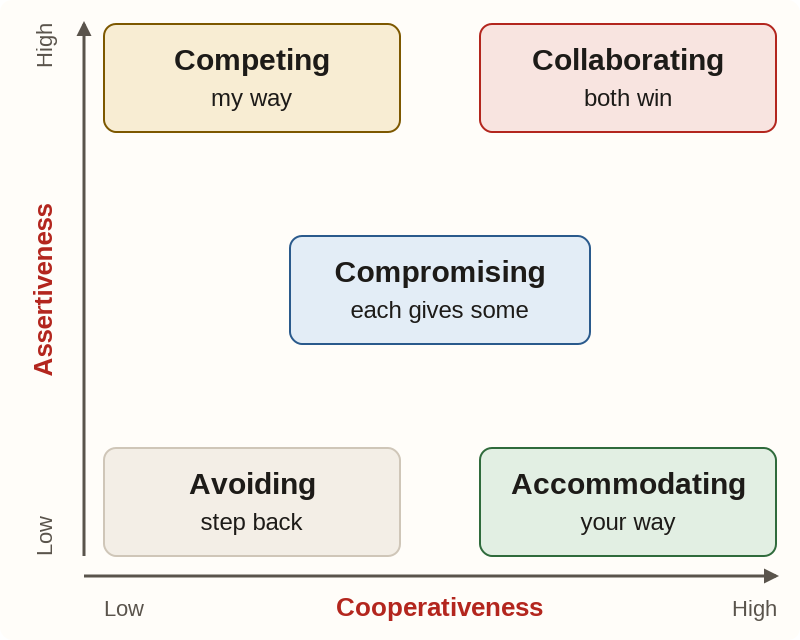
Thomas-Kilmann Conflict Modes
Sorts ways of handling conflict by assertiveness and cooperativeness into five modes.Read the framework →
Read next
Developing your people
You want your team to grow, not just deliver. Adapt how you lead each person, coach well, shape their roles and check it works.
Reorganising the business
You need to change how the business is organised, and a new org chart will not do it alone. Diagnose, design and land the change.
Fixing a broken process
Work is slow, errors keep returning and the workarounds have workarounds. See the whole flow, find the causes and keep them fixed.