Scenario
Developing your people
You want your team to grow, not just deliver. Adapt how you lead each person, coach well, shape their roles and check it works.
Say you manage a team of six with very different levels of experience: one person is new to the job, two are solid but restless, and one could probably do your role. Development is not a yearly review or a training budget. It is how you manage each person day to day. These steps move from how you lead each person, through feedback and coaching, to the work itself and whether your efforts are making a difference.
How much direction does each person need right now?
Start with Situational Leadership: match your style to each person's readiness for a specific task, not to them as a whole. Your new starter may need clear telling on one task while your strongest member needs you to step back and delegate. The same person can need different styles for different work. Treat this as a useful habit of mind rather than a proven formula, since the evidence behind it is mixed. It gives you a first view of where each person is.
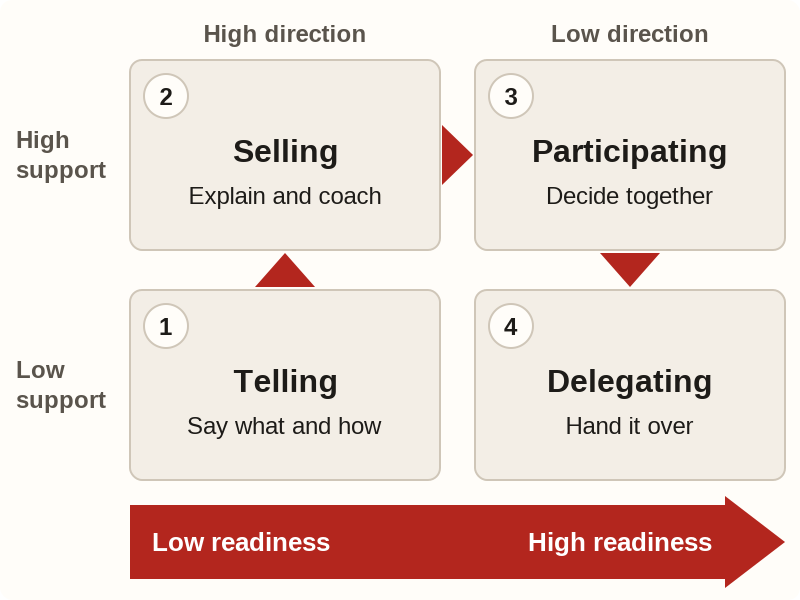
Situational Leadership
Matches leadership style to a follower's readiness for a task.Read the framework →What do they see in themselves, and what do others see?
Development goes faster when people know their own strengths and blind spots. The Johari Window gives you a way to talk about this: widen the open area by offering specific feedback, and by sharing a little of your own. Go carefully. In a team where trust is low, a group exercise can do harm, so start with one-to-one conversations. What surfaces here, such as a blind spot or a hidden ambition, becomes the material for coaching.
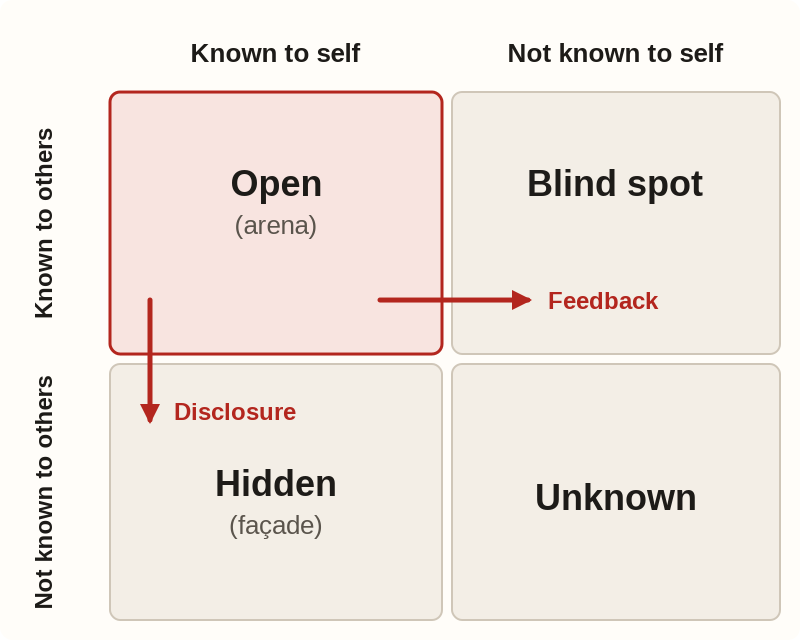
Johari Window
Maps what is known about a person by themselves and by others into four areas of awareness.Read the framework →How do I help them work out their own next step?
With some shared awareness in place, use the GROW Model to structure development conversations. Agree what the person wants to achieve, look honestly at where things stand, explore options they come up with, and finish with a specific commitment. Your job is mostly to ask and listen rather than to advise. If you find yourself running through the four headings as a checklist, slow down. The commitments from these conversations often point to changes in the job itself.
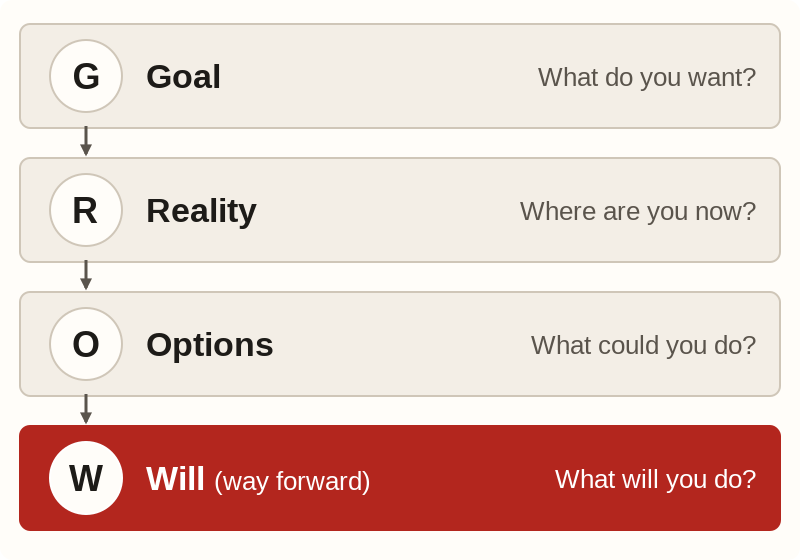
GROW Model
Structures a coaching conversation from the goal, through current reality and options, to a commitment.Read the framework →Does their role give them room to grow?
Coaching can only go so far if the work is narrow or tightly controlled. The Job Characteristics Model gives you five features to look at: variety, whole pieces of work, work that visibly matters, autonomy and feedback from the work itself. For your restless performers, adding ownership of a whole process or more say over how they work may do more than a course. Expect stronger effects on satisfaction than on performance, and remember not everyone wants a bigger role.
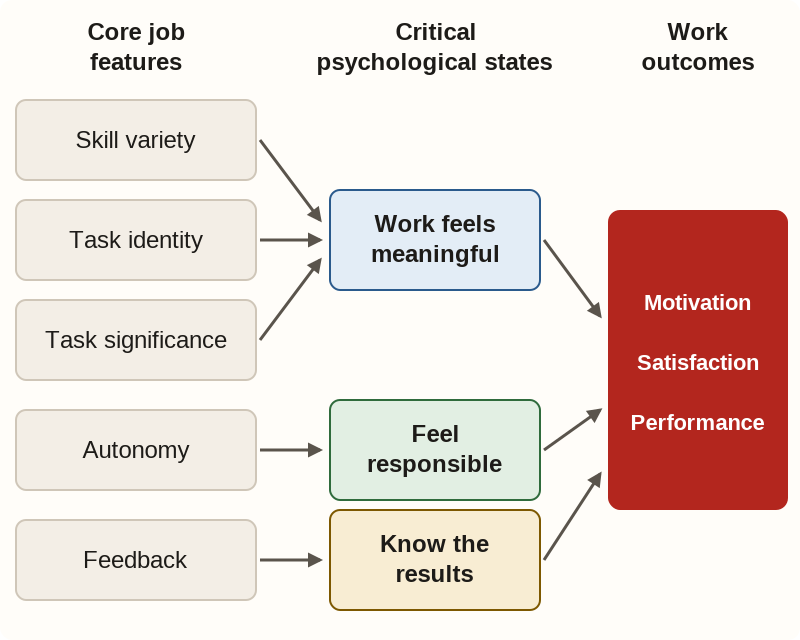
Job Characteristics Model
Links five core job features, through three psychological states, to motivation, satisfaction and performance.Read the framework →Is the development making a difference?
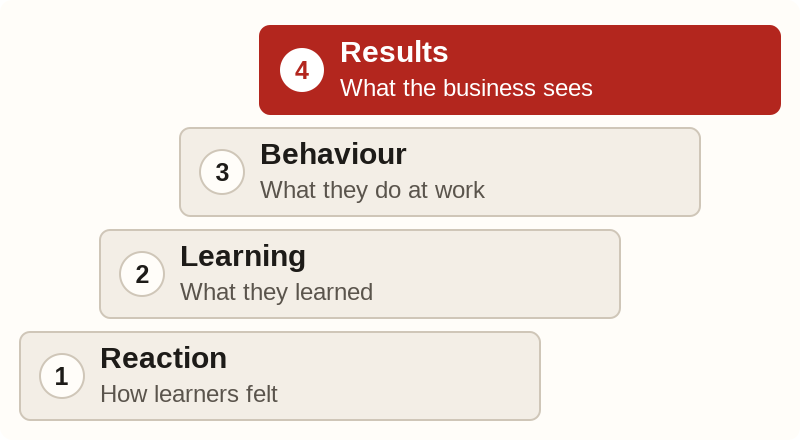
When you do invest in training or a development programme, decide up front how you will judge it. Kirkpatrick's Four Levels moves from how people felt about it, to what they learned, to whether their behaviour changed at work, to results the business can see. Evaluation often stops at whether people enjoyed it. Aim at least for behaviour: check a few weeks later whether the new skill shows up in the job. That evidence tells you where to go next with each person.
Kirkpatrick's Four Levels
Evaluates training at four levels, from how learners feel to the results the business sees.Read the framework →
Read next
A team that isn't working
Deadlines slip, meetings go quiet and the same arguments keep coming back. Find out why, then decide what to change first.
Leading a change programme
You have to move an organisation from the old way of working to a new one. Plan the change and bring people with you.
Reorganising the business
You need to change how the business is organised, and a new org chart will not do it alone. Diagnose, design and land the change.