Scenario Planning
Builds several plausible futures around key uncertainties to test strategies against each.
Helps with
- too uncertain to forecast
- forecasts keep turning out wrong
- testing strategy against several possible futures
- planning when the future is unclear
Use it when
Planning under deep uncertainty where single forecasts keep failing.
The parts
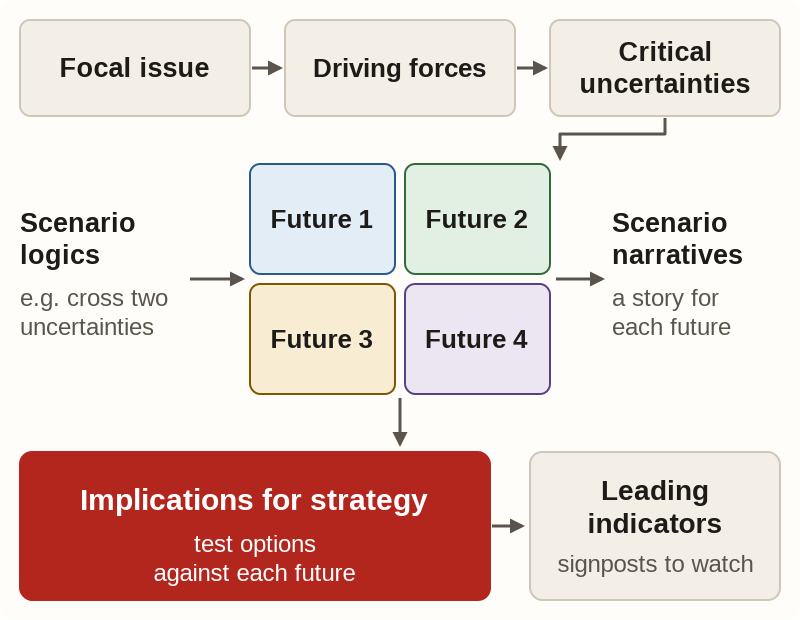
- Focal issue or decision
- Driving forces
- Critical uncertainties
- Scenario logics
- Scenario narratives
- Implications for strategy
- Leading indicators
Watch out
Scenarios become stories nobody acts on unless they are tied to decisions and signposts.
Where it comes from
Herman Kahn wrote scenarios at RAND in the 1950s; Wack and Newland built Shell's strategic use of them from 1971, and the steps shown follow later practitioner guides rather than one canonical list.