SWOT Analysis
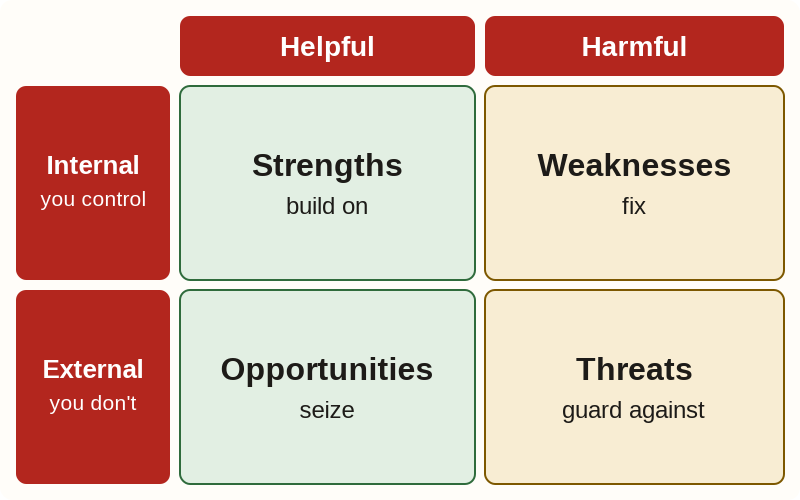
Sorts internal and external factors into strengths, weaknesses, opportunities and threats.
Helps with
- summarising where we stand before planning
- listing our internal and external factors
- sorting what helps and hurts the business
- not sure what position we are in
Use it when
Summarising a position before choosing strategic options.
The parts
- Strengths
- Weaknesses
- Opportunities
- Threats
Watch out
Easily becomes a list with no priorities or decisions.
Where it comes from
Archival research credits Robert Stewart's SOFT approach at SRI in the mid-1960s, later relabelled SWOT. The popular credit to Albert Humphrey rests on his own later account, and Harvard's 1960s business-policy teaching is also cited.