Scenario
Customers are leaving
Churn is rising and nobody agrees why. Find who is leaving, what they are worth and where the experience lets them down.
Renewals are slipping, repeat orders have thinned out and the sales team blames price while support blames the product. Before you launch a retention campaign, you need to know who is leaving, which of them you can least afford to lose, and what in their experience pushed them away. This guide takes you from the purchase data to the service itself, and then to the people who deliver it.
Who exactly is drifting away?
Start with what customers do, not what they say. RFM Analysis sorts your customers by how recently, how often and how much they have bought, so you can see which groups have gone quiet. A segment of once-frequent buyers whose last order keeps getting older is your early warning. It tells you who is leaving but not why, so carry these lapsing segments into the next step and put a value on them.
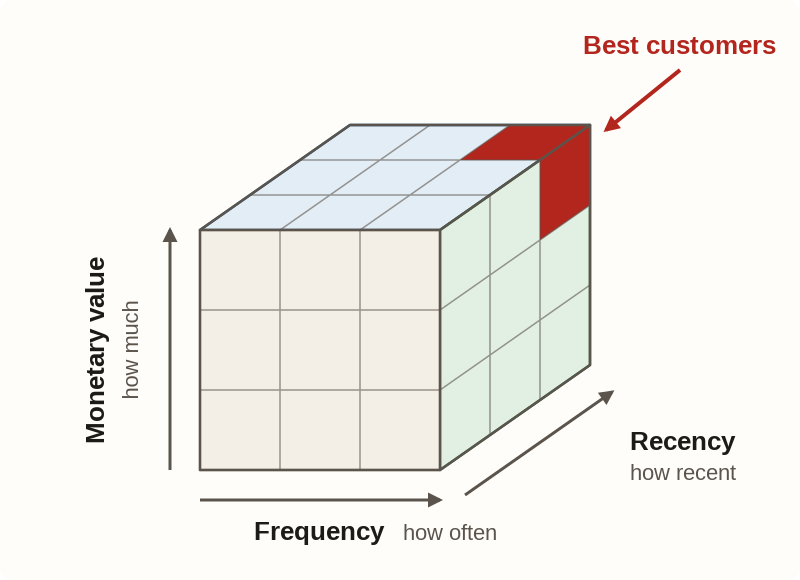
RFM Analysis
Segments customers by how recently, how often and how much they have bought.Read the framework →Which customers are worth fighting for?
Not every departure hurts equally. Customer Lifetime Value estimates the profit each segment will bring over the whole relationship, which tells you how much you can sensibly spend to keep it. Run it for the lapsing segments from your RFM work. Because the answer swings with the retention and discount rates you assume, test a range rather than trusting one number. The result is a short list of segments where keeping customers clearly pays.
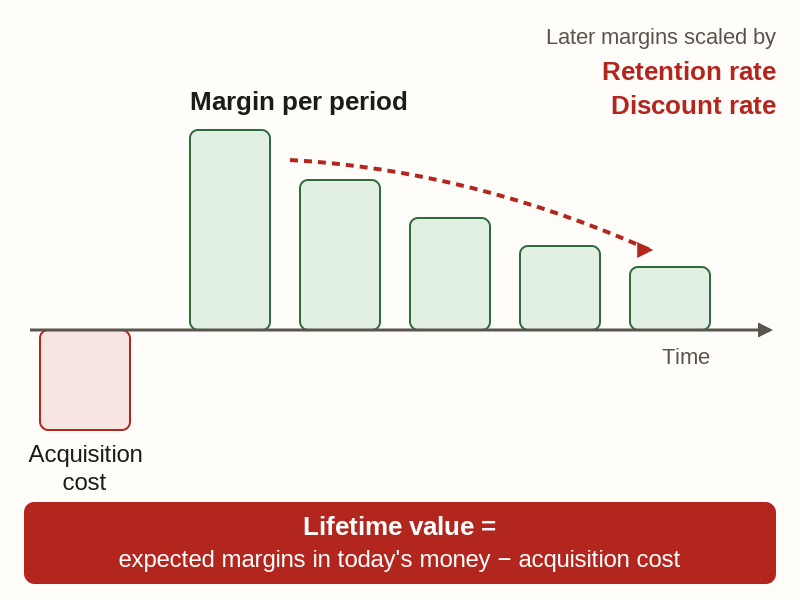
Customer Lifetime Value
Estimates the present value of the profit a customer will bring over the whole relationship.Read the framework →How do the customers we still have feel about us?
Now ask the people behind the numbers. Net Promoter Score gives you a simple, repeatable read on sentiment, split into promoters, passives and detractors. Its value here is the trend and the comments: are detractors growing in the segments you care about, and what do they say when you ask why? Use it alongside the behaviour you have already measured, never in place of it. The complaints you collect point you at the service.
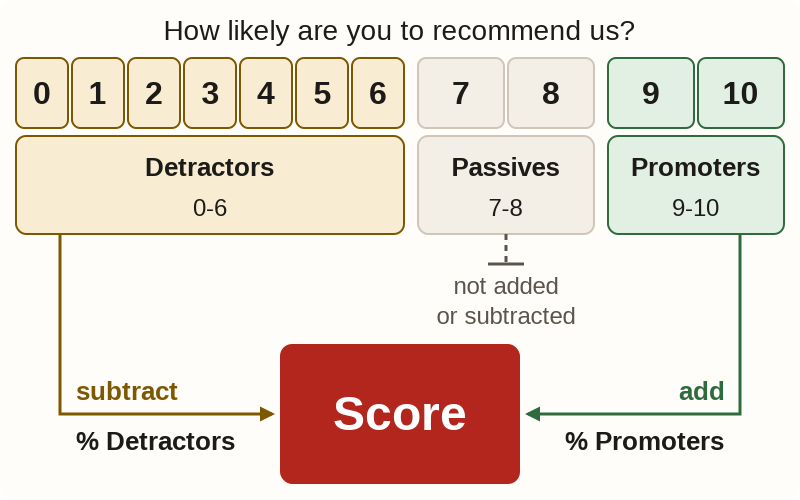
Net Promoter Score
Scores loyalty as promoters minus detractors on a 0-10 likelihood-to-recommend question.Read the framework →Where does our service fall short?
Detractor comments are often vague. SERVQUAL gives you a structure for turning them into specific gaps between what customers expect and what they get, across reliability, responsiveness, assurance, empathy and the tangible parts of the service. A firm that thinks it has a price problem sometimes finds a reliability problem instead. Treat the five dimensions as prompts rather than a fixed truth, and take the biggest gaps forward.
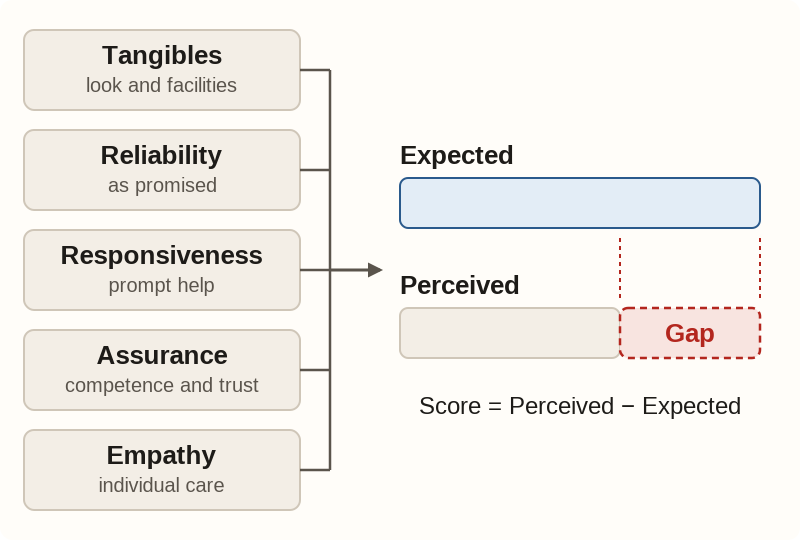
SERVQUAL
Measures service quality as the gap between customer expectations and perceptions.Read the framework →At what point in the relationship do we lose them?
The Consumer Decision Journey treats buying as a loop in which the experience after purchase decides whether a customer comes back or starts shopping around again. Map your service gaps onto that loop. If customers leave at renewal after a weak onboarding, more marketing will not help; the fix belongs in the post-purchase experience. Journeys vary a lot by product and channel, so build yours from your own customers, not a generic picture.
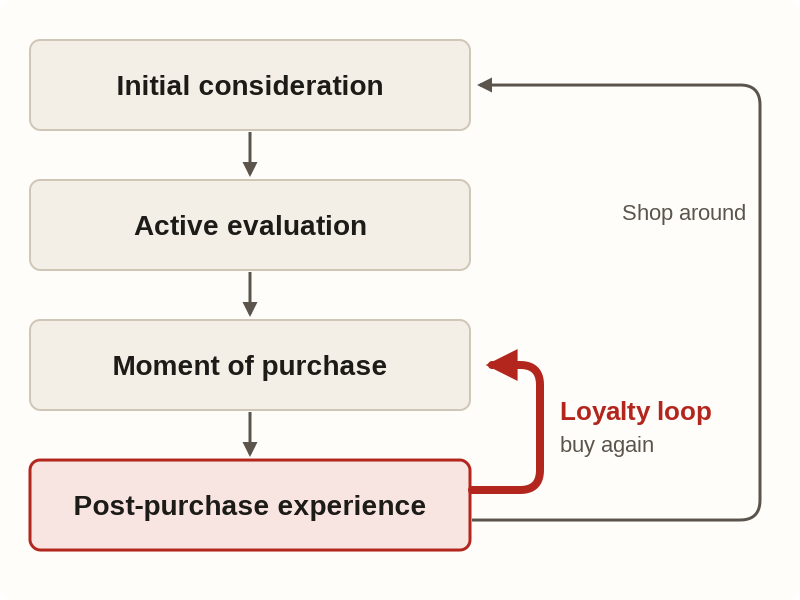
Consumer Decision Journey
Replaces the linear purchase funnel with a loop in which post-purchase experience drives the next choice.Read the framework →Will investing in frontline staff pay off?
Many of the fixes you have found depend on the people who serve customers. The Service-Profit Chain sets out the argument that internal support and staff satisfaction lead to better service, loyalty and, in time, profit. Use it to make the case for investing in the frontline, but treat each link as a claim to test in your own business, for example by comparing staff turnover and retention by team or branch.
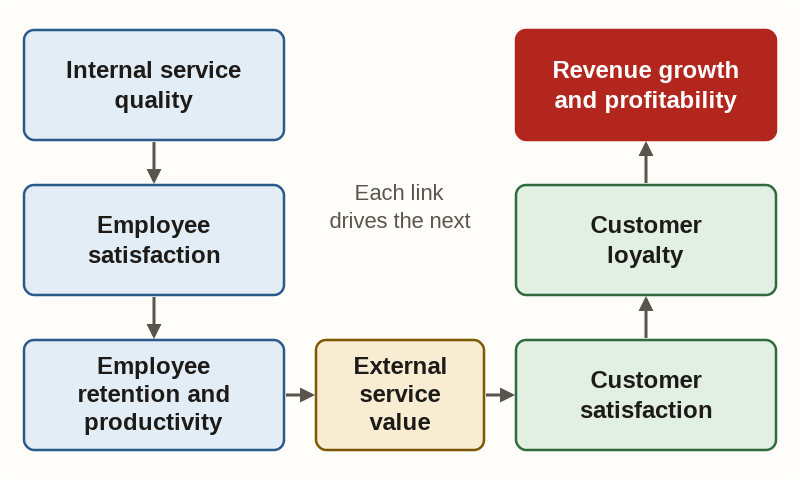
Service-Profit Chain
Links staff satisfaction and service value through customer loyalty to growth and profit.Read the framework →
Read next
Pricing a product
You need to set or reset a price and want more than a guess. Go from customer value to a price that makes money and holds.
Launching a new product
You have an idea for a new product and want to launch without wasting a year. Go from customer need to a tested first version.
Fixing a broken process
Work is slow, errors keep returning and the workarounds have workarounds. See the whole flow, find the causes and keep them fixed.