Scenario
Pricing a product
You need to set or reset a price and want more than a guess. Go from customer value to a price that makes money and holds.
Say you are about to price a new service, or suspect your current price leaves money on the table. Pricing often ends up as cost plus a margin, or a copy of the nearest rival. This guide builds the decision from several angles: what customers value, what range they find acceptable, which features they will pay for, whether the numbers make money, and how much of the price you keep.
What is the product worth to the customer?
Price follows value, so start there. The Value Proposition Canvas sets out the target segment's jobs, pains and gains against what your product does for them. The pains you relieve and gains you create, especially those that save money or time, are your basis for charging. A product that fits one segment strongly can often charge more there than across the whole market. Carry forward a clear view of which segment you are pricing for.
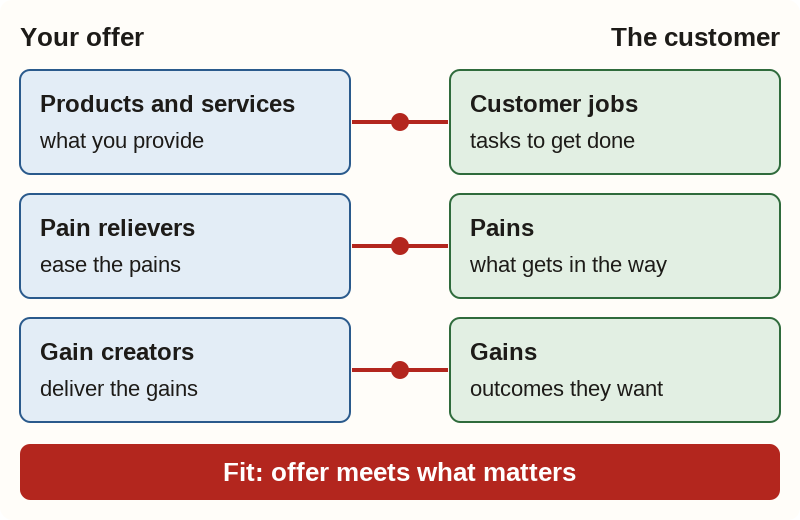
Value Proposition Canvas
Matches what a product offers to a customer segment's jobs, pains and gains.Read the framework →What price range will buyers accept?
With the segment chosen, find a sensible range. The Van Westendorp Price Sensitivity Meter asks four questions about when a price feels too cheap, cheap, expensive and too expensive, and the answers mark out an acceptable band. It is quick and works well for new products. Remember it measures what people say, not what they do, and ignores rival offers, so treat the result as a range to explore rather than a forecast of sales.
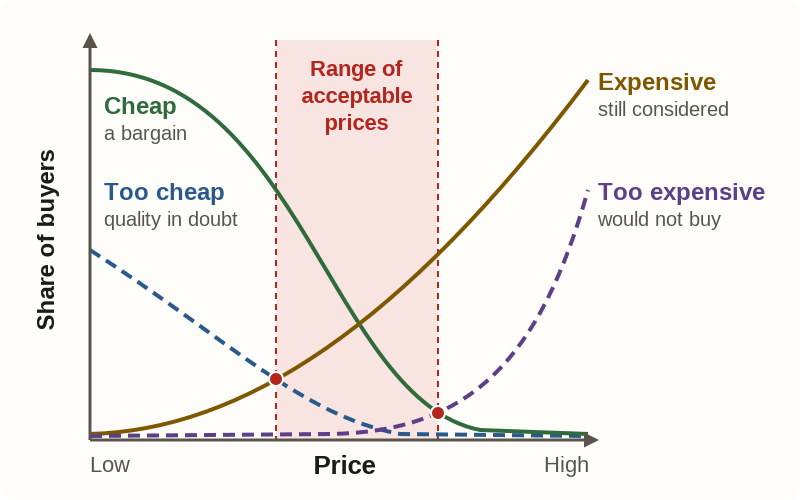
Van Westendorp Price Sensitivity Meter
Finds an acceptable price range from four survey questions on when a price feels too cheap or too dear.Read the framework →Which features will customers pay more for?
To go beyond a range, Conjoint Analysis shows how customers value each feature and price level by asking them to choose between whole offers. It can tell you whether a premium tier is worth building, or how much a feature adds to willingness to pay. Results only cover the attributes and levels you test, so design the study around the decisions you face. Use the market simulation to compare a few candidate packages.
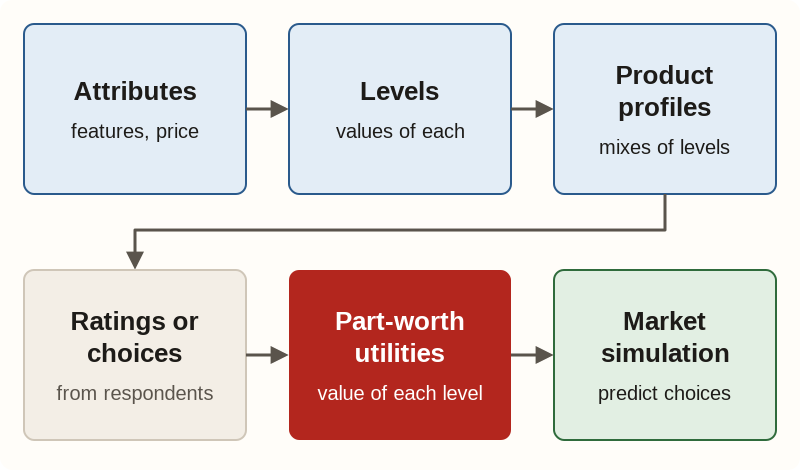
Conjoint Analysis
Infers how much customers value each product feature and price from their choices between whole products.Read the framework →Does this price make money?
Now check the economics. Break-Even (CVP) Analysis takes your fixed costs, variable cost per unit and candidate price, and shows the volume needed to break even and the margin of safety above it. Compare that volume with what your research suggests you can sell at each price. A popular price that needs unrealistic volume is a warning. Its straight-line assumptions weaken far from current volume, so test a few scenarios rather than one.
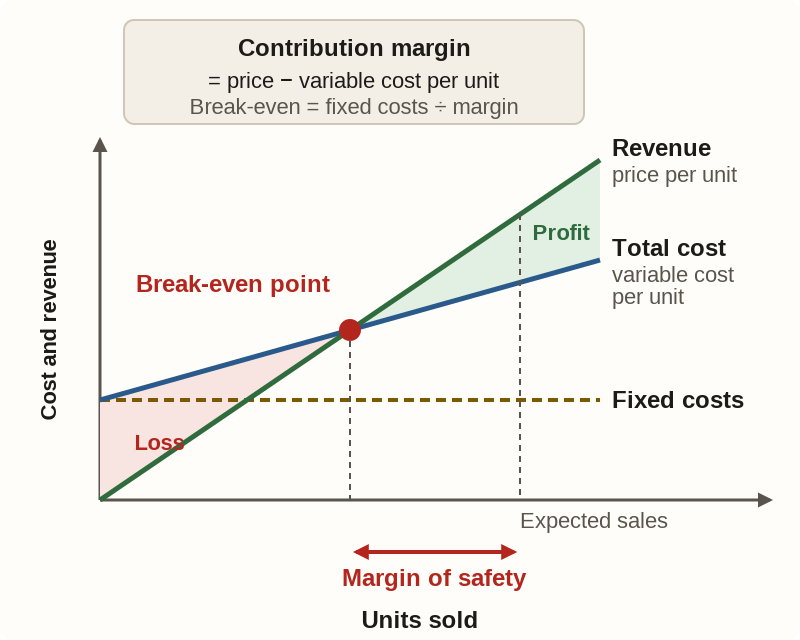
Break-Even (CVP) Analysis
Finds the sales volume at which revenue covers fixed and variable costs, and how profit moves around it.Read the framework →How much of the list price will we keep?
Setting a list price is only half the job. The Pocket Price Waterfall tracks every discount, rebate and allowance between list price and the pocket price you keep. For an existing product, map it before changing the list price, since leaks may matter more. For a new one, decide the discount rules now so sales teams cannot erode the price deal by deal. You will need transaction-level data, so start capturing it from the first sale.
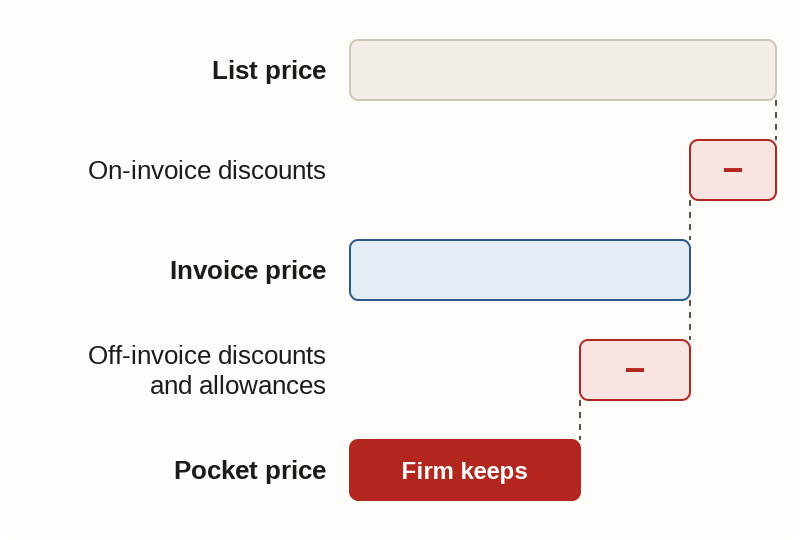
Pocket Price Waterfall
Tracks how discounts and allowances erode the list price down to the pocket price a firm keeps.Read the framework →
Read next
Launching a new product
You have an idea for a new product and want to launch without wasting a year. Go from customer need to a tested first version.
Responding to a competitor
A rival has made a move and your team wants to react. Read the rival, test your own position, then choose a response.
Making an investment decision
A new site, a project or an acquisition is on the table. Test whether it makes money, what it is worth today and what could go wrong.