Scenario
Responding to a competitor
A rival has made a move and your team wants to react. Read the rival, test your own position, then choose a response.
Say a competitor has just cut prices or launched a product aimed at your best customers. The instinct is to match it straight away. This guide slows that down enough to choose a response, not a reflex.
What is the rival trying to do, and what will they do next?
Begin with the competitor, not your reaction. Porter's Four Corners builds a profile from their future goals, assumptions, current strategy and capabilities, and uses it to predict their next moves and how they would react to yours. A price cut by a rival chasing share behaves differently from one by a rival clearing stock. Be honest about how much is inference; goals and assumptions are rarely visible from outside. The profile frames every option that follows.
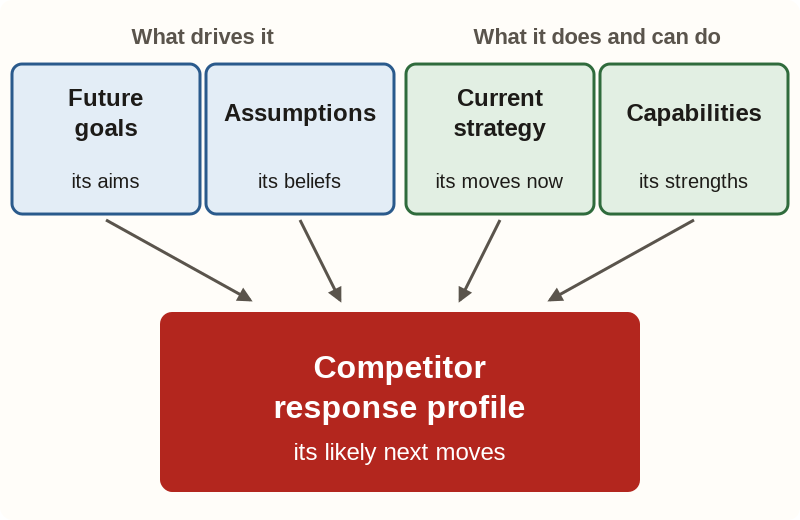
Porter's Four Corners
Predicts a rival's next moves from its goals, assumptions, current strategy and capabilities.Read the framework →What does our position rest on?
Next, be clear about your own ground. Porter's Generic Strategies asks whether you win on cost, on differentiation, or by focusing on a narrow segment. If you are a differentiator, matching a cost leader's price cut may destroy the very thing customers pay you for. If your position is muddled, the rival's move may have exposed that. Some firms do sustain hybrid positions, so use this to clarify rather than to force a single label.
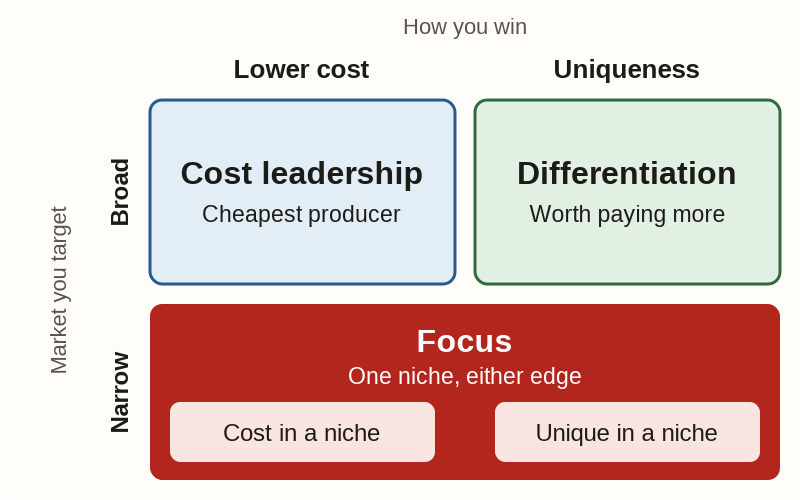
Porter's Generic Strategies
Argues firms win through cost leadership, differentiation or focus.Read the framework →Will our advantage hold?
With your position named, test whether it is durable. 7 Powers lists sources of lasting advantage, such as switching costs, network economies or a cornered resource, each pairing a benefit with a barrier that stops rivals copying it. If you can show the barrier, you can often ride out the move. If you cannot, the threat is more serious and a bolder response may be justified. Be strict: a benefit without a barrier is not power.
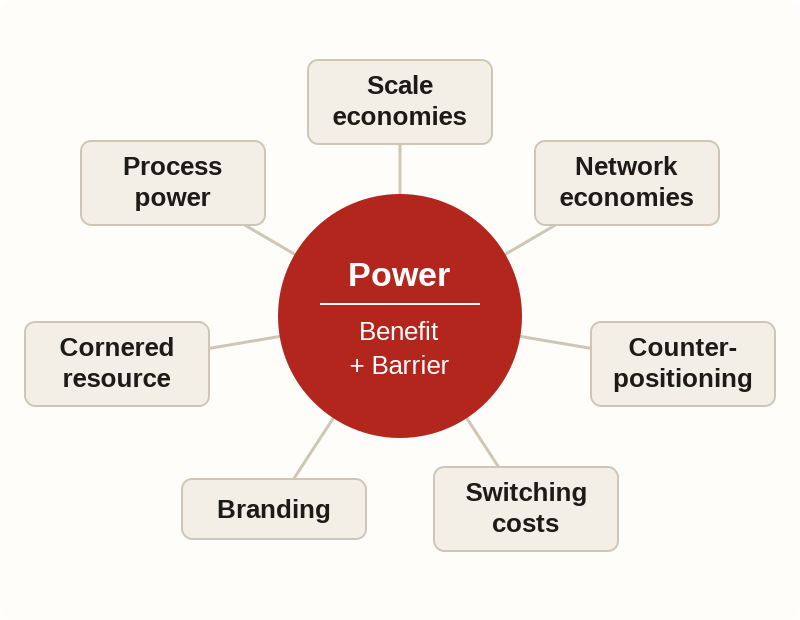
7 Powers
Names seven sources of durable advantage, each pairing a benefit with a barrier to rivals.Read the framework →Who else could help us respond?
Responses need not be made alone. The Value Net maps your customers, suppliers, competitors and complementors, the firms whose products make yours more valuable. A partnership with a complementor, or a better deal with a supplier, can strengthen your offer without a price war. It can also show where the rival is vulnerable through its own partners. Go beyond the map and think through how each player would respond to your move.
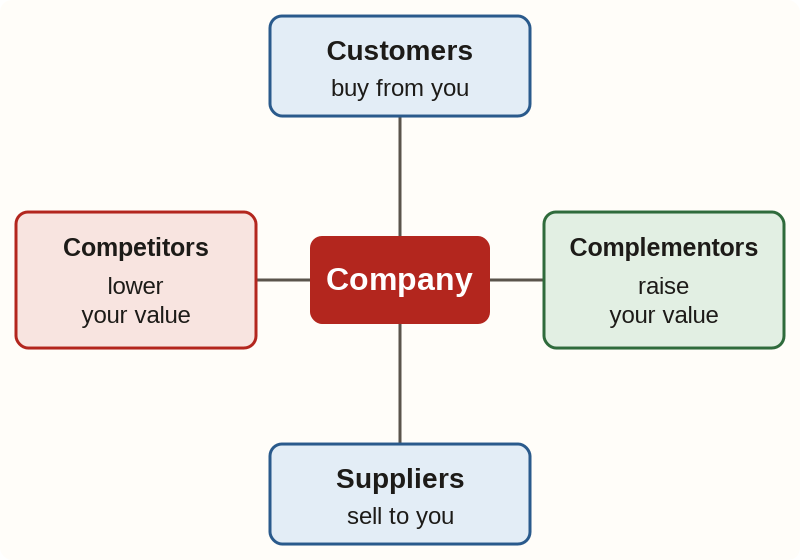
Value Net
Maps a firm's customers, suppliers, competitors and complementors to show where value is created and shared.Read the framework →Should we compete head-on or move elsewhere?
Finally, consider stepping out of the fight. Blue Ocean Strategy asks what you could eliminate, reduce, raise or create to offer something buyers value that the rival does not. That can be a better answer than matching a move you cannot win on. It is not always the right one: defending a strong position directly is sometimes wiser. Any new space you find will attract imitators, so tie it back to the advantages you tested earlier.
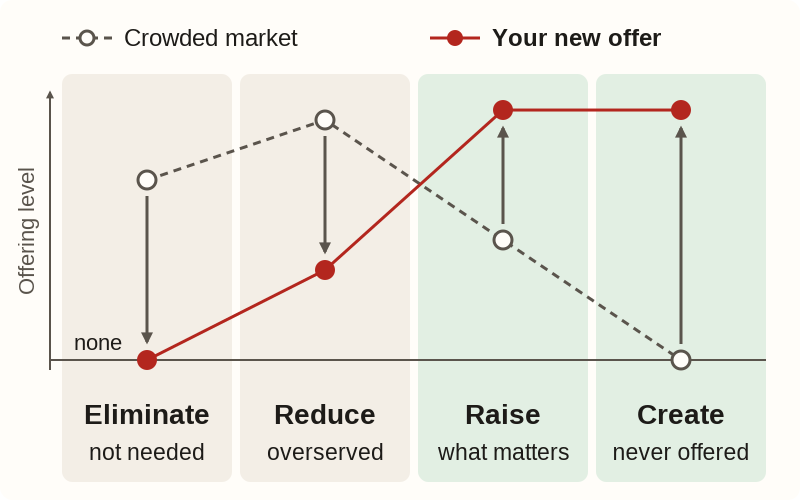
Blue Ocean Strategy
Seeks uncontested market space by reshaping what buyers value.Read the framework →
Read next
Pricing a product
You need to set or reset a price and want more than a guess. Go from customer value to a price that makes money and holds.
Customers are leaving
Churn is rising and nobody agrees why. Find who is leaving, what they are worth and where the experience lets them down.
Setting the annual strategy
It's planning season and you need a strategy, not a wish list. Go from an honest diagnosis to goals each team can act on.