After Action Review
Runs a short structured debrief comparing what was meant to happen with what did, and why.
Helps with
- no time to learn from projects
- same mistakes after every project
- debrief after an incident
- what went wrong versus what we planned
Use it when
Learning quickly from a project, incident or exercise while it is fresh.
The parts
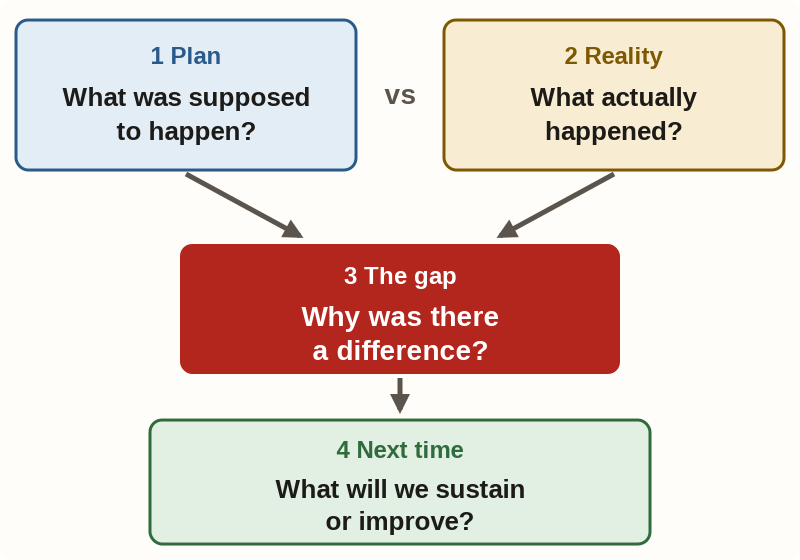
- What was supposed to happen?
- What actually happened?
- Why was there a difference?
- What will we sustain or improve?
Watch out
It turns into blame or a box-ticking ritual unless people feel safe to speak and the lessons are acted on.
Where it comes from
Morrison and Meliza (US Army Research Institute, 1999) date the first AARs to Army tactical training in the mid-1970s and frame them around three questions: what happened, why, and how to sustain or improve; many later guides add 'what was supposed to happen' first.