Change Curve
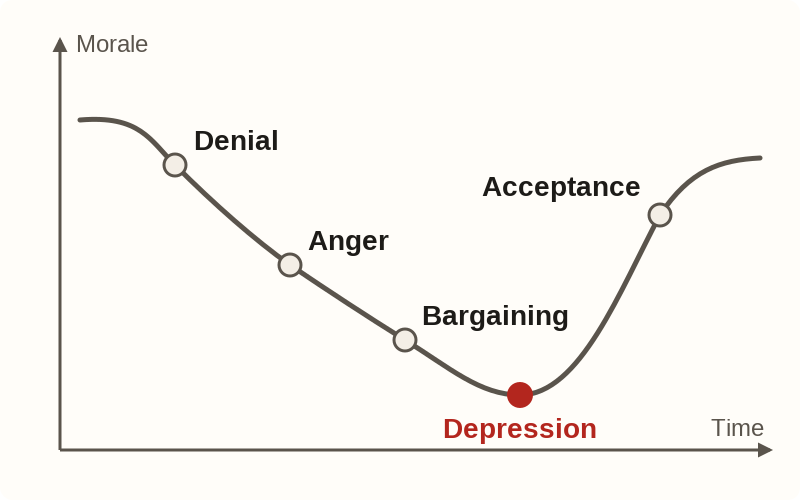
Maps the emotional dip and recovery people typically go through when a change is imposed on them.
Helps with
- staff upset about an unwelcome change
- anticipating how people will react to a change
- morale dropping after a change is announced
- supporting people through a rough change
Use it when
Anticipating how people will react to an unwelcome change.
The parts
- Denial
- Anger
- Bargaining
- Depression
- Acceptance
Watch out
Kübler-Ross drew the stages from dying patients, not employees; people do not pass through them in a fixed order, and the curve can excuse ignoring real objections.
Where it comes from
The five stages come from Kübler-Ross's 1969 book on terminally ill patients; the business change curve is a later adaptation with many versions and no single first publication.