Bullwhip Effect
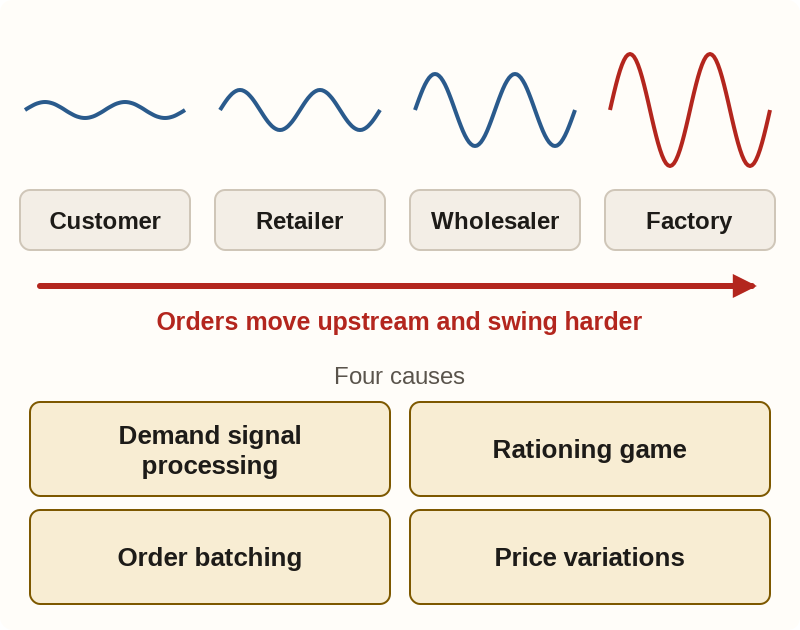
Explains how order swings grow larger at each step upstream in a supply chain.
Helps with
- suppliers see wild swings in orders
- price promotions causing order spikes
- supplier demand far more volatile than sales
- why upstream orders swing so much
Use it when
Diagnosing why suppliers see far more volatile demand than end customers.
The parts
- Demand signal processing
- Rationing game
- Order batching
- Price variations
Watch out
Better forecasting alone rarely fixes it; sharing sell-through data and changing ordering rules matter more.
Where it comes from
Jay Forrester's industrial dynamics work described demand amplification decades earlier, and the name was already in use; Lee and colleagues analysed its four causes.