Scenario
Entering a new market
You are weighing a move into a market you don't serve yet. Decide whether to go, how far to commit at first and which customers to win.
Say you run a 60-person firm that sells well at home, and a board member keeps asking about the next region over. Excitement is easy to find; evidence is harder. This guide takes you through the questions to answer before you commit people and money, in roughly the order they come up. Each step narrows the choice, so by the end you know whether to go, how far to commit at first, and which customers to win.
Is a new market the right way to grow?
Before studying any market, check that entering one is the move you mean to make. The Ansoff Matrix sets market development beside selling more to current customers, building new products, or diversifying. Placing your idea on it shows how much risk you are taking on: same product, new buyers. If the new market would also need a reworked product, you are nearer diversification, and the bar rises. Carry forward a clear statement of what is new and what stays the same, because the rest of the analysis tests that.
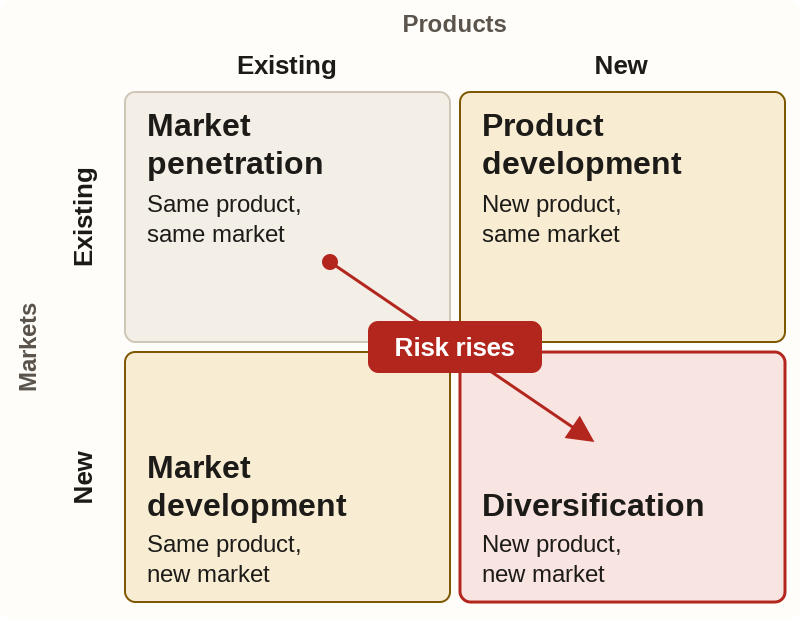
Ansoff Matrix
Maps growth options by whether products and markets are new or existing.Read the framework →What outside forces will shape this market?
Next, scan what you cannot control. PESTEL walks through political, economic, social, technological, environmental and legal factors in the target market. The point is not a full list but the handful that change your plan: a licensing rule that adds months, a currency that swings your margins, a buying habit that suits or blocks your channel. Write each one with its consequence for you. Those consequences feed straight into the industry view, since many of them raise or lower barriers to entry.
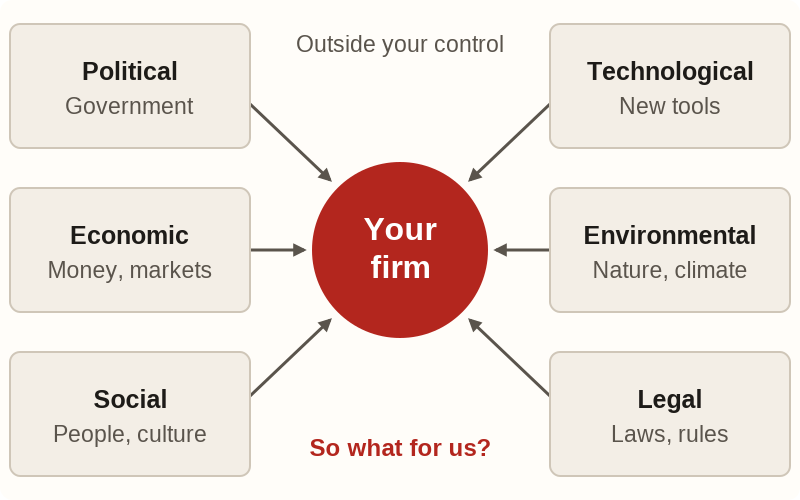
PESTEL
Scans the macro environment for forces outside a firm's control.Read the framework →Can anyone make money in this industry?
A growing market can still be a poor one to enter. Porter's Five Forces looks at rivalry, buyer and supplier power, substitutes and the threat of new entrants, which in this case is you. Ask what keeps margins up or down there, and what it will cost you to get past the barriers incumbents enjoy. If the structure only works for players with scale you lack, that is worth knowing now. Be careful in fast-moving or platform markets, where a snapshot of structure can mislead.
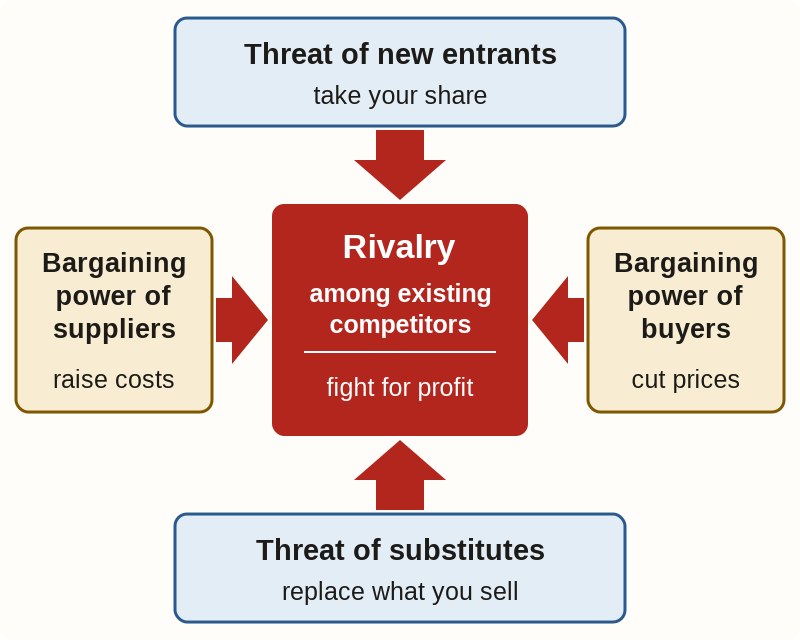
Porter's Five Forces
Explains an industry's profitability through five competitive pressures.Read the framework →How far is this market from home?
If the market is abroad, distance matters as much as size. The CAGE Distance Framework compares cultural, administrative, geographic and economic distance between home and target. A large market that is far away on the dimensions that matter to your industry may be worth less to you than a smaller, closer one. Use it to compare two or three candidates side by side rather than judging one in isolation. The result tells you how much you will need to adapt, which shapes the pace of entry.
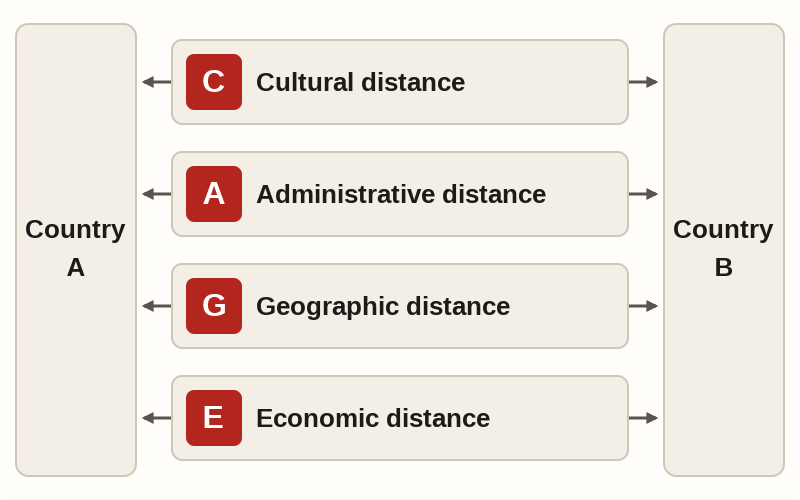
CAGE Distance Framework
Measures how far apart two countries are across cultural, administrative, geographic and economic distance.Read the framework →How much should we commit at first?
With the distance understood, decide the order and pace of commitment. The Uppsala Internationalisation Model suggests firms commit more as they learn: perhaps an agent or partner first, then a local team, then a full operation. Treat it as a way to plan learning milestones, not a rule. Some firms, especially digital ones, sensibly go faster. Agree what you need to learn at each stage and what evidence would justify the next level of commitment.
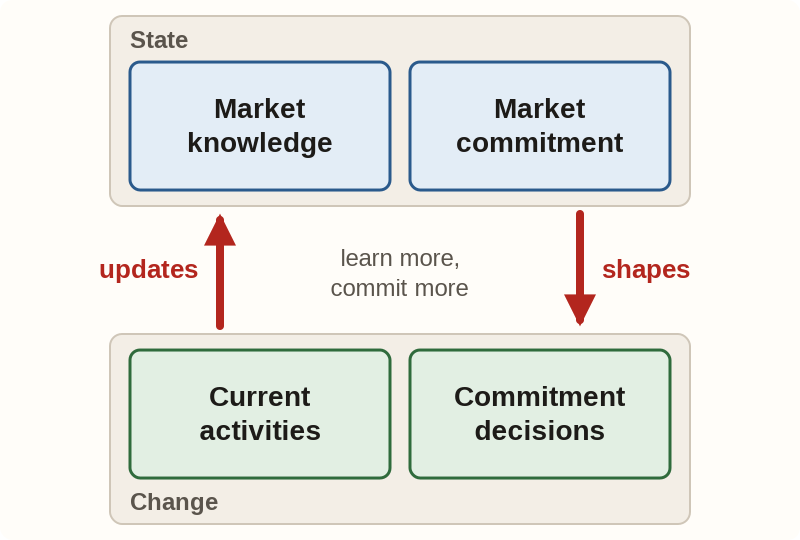
Uppsala Internationalisation Model
Explains how firms internationalise step by step, committing more as they learn about each market.Read the framework →Who exactly will we serve there?
Finally, choose your first customers. STP takes you from segmenting the new market to targeting the segments you can win and deciding how you want to be seen. Your PESTEL and CAGE findings help here: some segments will sit closer to your home customers than others. Pick segments by how they buy and what they need, not just by size or demographics. A sharp position in one segment usually beats a thin presence across the whole market.
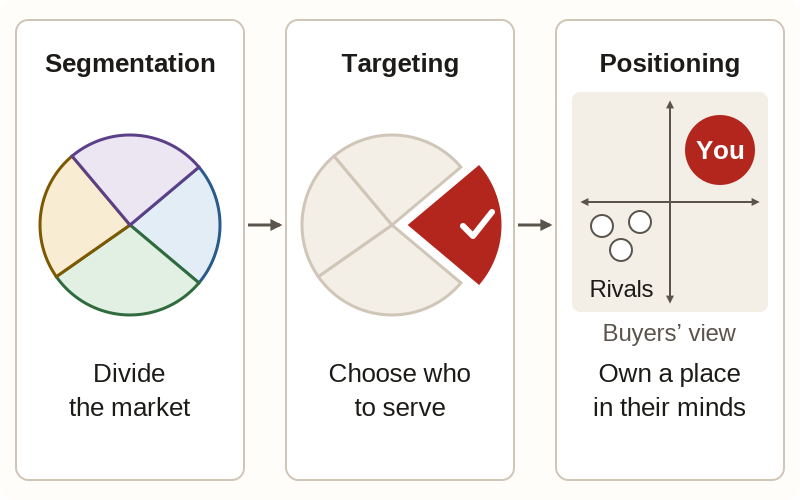
STP (Segmentation, Targeting, Positioning)
Moves from dividing a market to choosing and owning a place in it.Read the framework →
Read next
Setting the annual strategy
It's planning season and you need a strategy, not a wish list. Go from an honest diagnosis to goals each team can act on.
Launching a new product
You have an idea for a new product and want to launch without wasting a year. Go from customer need to a tested first version.
Making an investment decision
A new site, a project or an acquisition is on the table. Test whether it makes money, what it is worth today and what could go wrong.