Scenario
Making a hard decision
The options are unclear, the stakes are high and people disagree. Frame the decision, settle who decides and test the choice.
Say you have to decide whether to close a struggling site, move its work elsewhere, or invest to turn it round. Every option hurts someone, the numbers are uncertain, and people you respect disagree. A muddled process can sink a hard decision as surely as bad analysis. These steps cover what kind of decision this is, who should make it, how to compare the options, and how to test the choice before you commit.
What kind of situation are we in?
Begin with Cynefin to decide how to decide. If cause and effect can be worked out with expert analysis, the situation is complicated and careful study will pay off. If outcomes only become clear by trying things, it is complex, and small reversible experiments may beat a big upfront choice. In a crisis you act first. Knowing which applies stops you over-analysing what you cannot know or rushing what you could work out. Carry this forward: it shapes who you involve and how much analysis is worth doing.
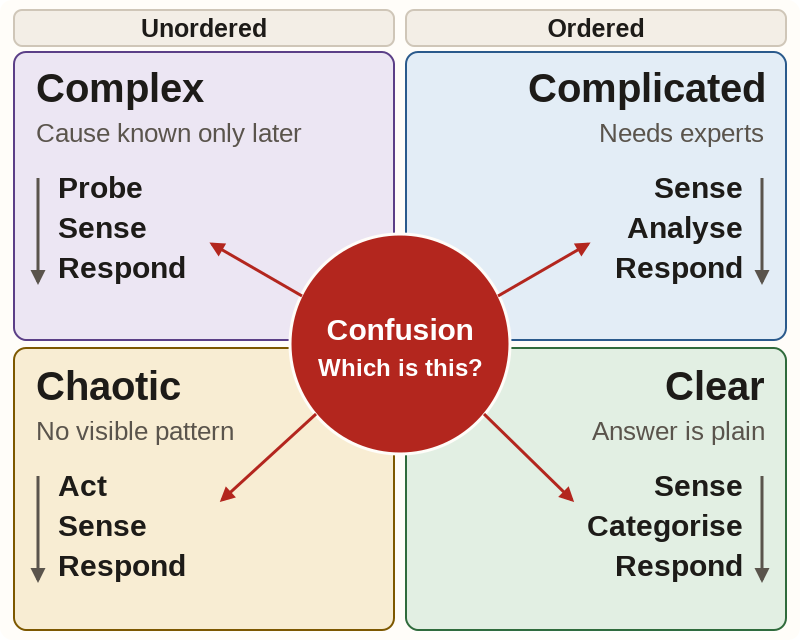
Cynefin
Matches the decision approach to the kind of situation you are in.Read the framework →Who has the final say?
Contested decisions often stall because nobody is sure who decides. RAPID Decision Roles makes it explicit: who recommends, who must agree, who gives input, who carries it out, and the one person who decides. Keep the agree role small, or you rebuild the bottleneck you are trying to clear. Settling this early also protects the decision later, since people who know they were consulted are more likely to accept an outcome they argued against.
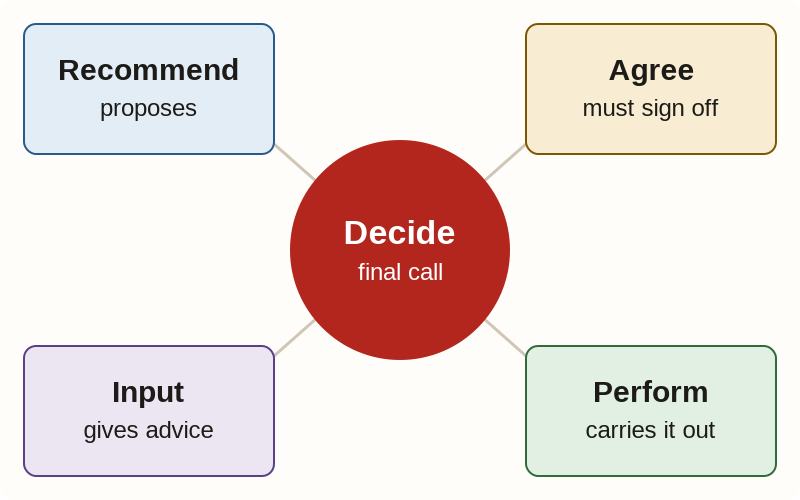
RAPID Decision Roles
Assigns who recommends, agrees, performs, gives input and decides on a key decision.Read the framework →How far should we involve the team?
With the decider named, choose how much to involve others. The Vroom-Yetton Decision Model asks whether you have the information you need, whether the team must accept the outcome for it to work, and whether they share your goals. A site closure may need wide consultation to be carried out well, even if you make the final call alone. You will rarely follow the model's full tree, but its questions help you pick a deliberate level of involvement rather than a default one.
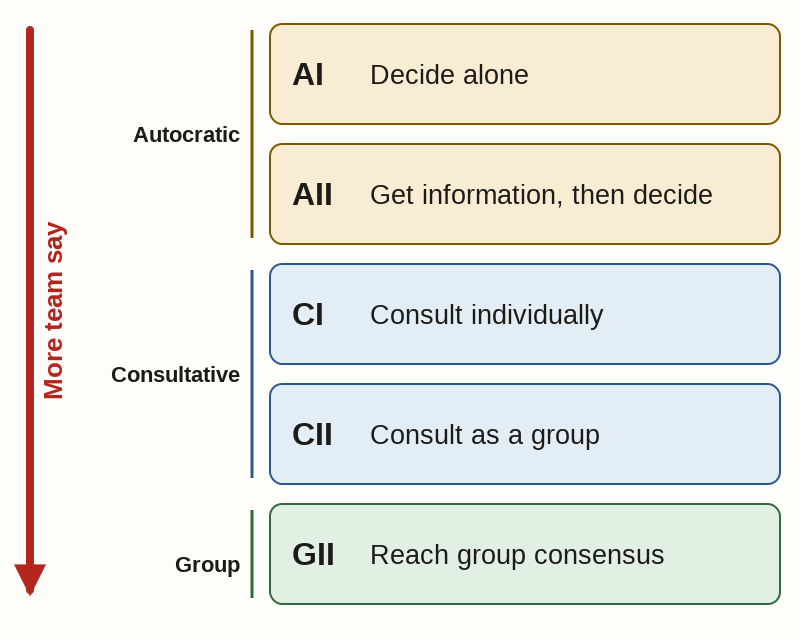
Vroom-Yetton Decision Model
Chooses how far to involve a team in a decision, from deciding alone to group consensus.Read the framework →Which outcomes could each option lead to?
Now map the options. A Decision Tree lays out each choice, the uncertain events that follow, such as whether demand recovers, and what each path is worth. Rolling back to expected values makes your assumptions visible and lets people argue about the probabilities rather than the conclusion. Treat the numbers as estimates, not facts; the main value is often seeing which uncertainty matters most. That points you to the criteria for the next step.
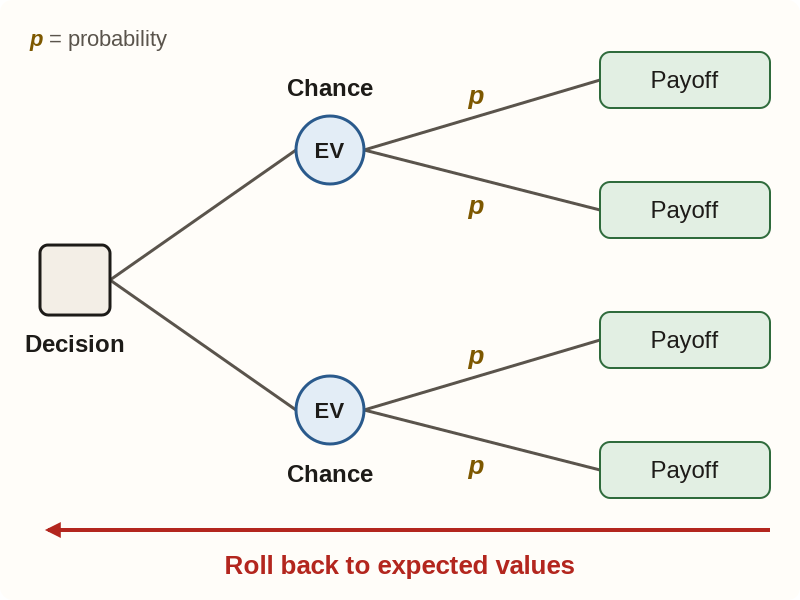
Decision Tree
Maps choices, chance events and payoffs as branches to compare expected values.Read the framework →How do the options compare on what matters beyond the money?
Not everything fits into expected value. Use a Pugh Matrix to compare the options against criteria such as impact on staff, customer risk and ease of reversal, scoring each as better, worse or the same as a baseline, perhaps the status quo. If you add weights, agree them before scoring, not after you see which option wins. The aim is to see trade-offs clearly and, often, to combine the best parts of two options into a stronger one.
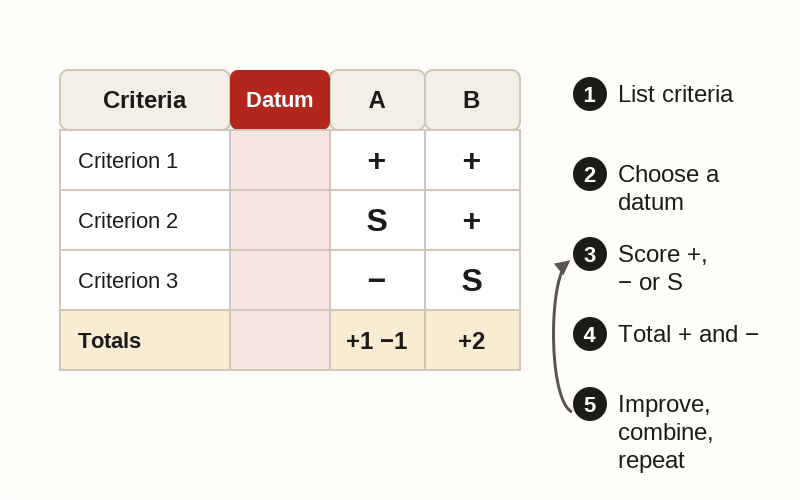
Pugh Matrix (Concept Selection)
Scores design options against criteria relative to a chosen baseline option.Read the framework →What would make this go wrong?
Before you commit, run a Pre-Mortem. Ask the group to imagine it is a year later and the decision has failed, then have each person write down why. This surfaces doubts that people held back while the decision still felt open. Change the choice, or name who will watch each serious risk and what they will do if it appears. Then decide, explain how you got there, and set a point to review it.
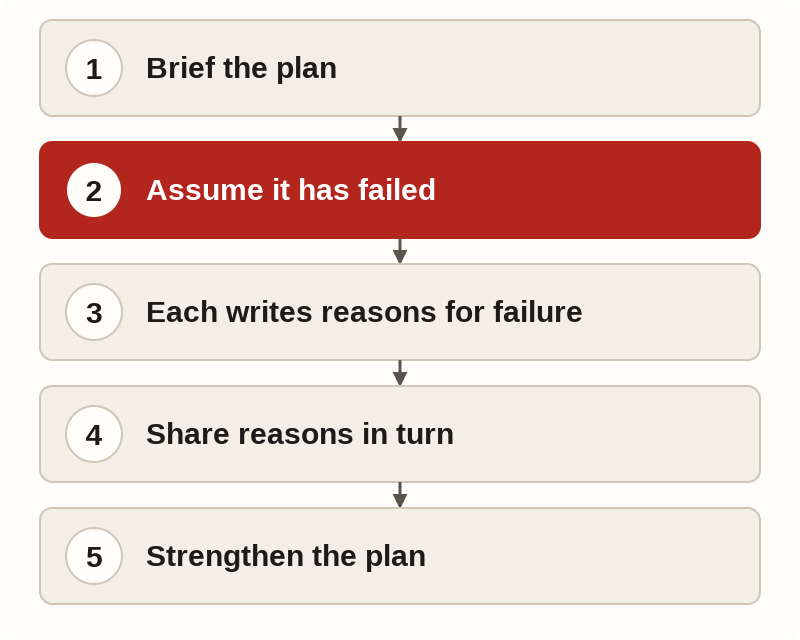
Pre-Mortem
Imagines a plan has already failed so the team can name the reasons before it starts.Read the framework →
Read next
Making an investment decision
A new site, a project or an acquisition is on the table. Test whether it makes money, what it is worth today and what could go wrong.
Writing a recommendation
The analysis is done and someone senior needs a decision. Structure the problem and write a recommendation they can act on.
Reorganising the business
You need to change how the business is organised, and a new org chart will not do it alone. Diagnose, design and land the change.