Scenario
Writing a recommendation
The analysis is done and someone senior needs a decision. Structure the problem and write a recommendation they can act on.
Say your director has asked whether the business should bring customer support in-house. You have data, interviews and opinions, and a deadline. The risk is a long document that walks through everything you did and leaves the reader to find the answer. These steps take you from framing the question and organising the analysis to building the argument and writing an opening that lands.
What exactly are we trying to answer?
Begin by writing the key question as precisely as you can, then break it down with an Issue Tree. The question ‘Should we bring support in-house?’ might split into three branches: would it improve service, what would it cost, and can we deliver it? Each branch then splits until it becomes something you can answer with analysis. Check the key question with the person who asked before you build branches. The tree tells you what to analyse and, later, what to leave out.
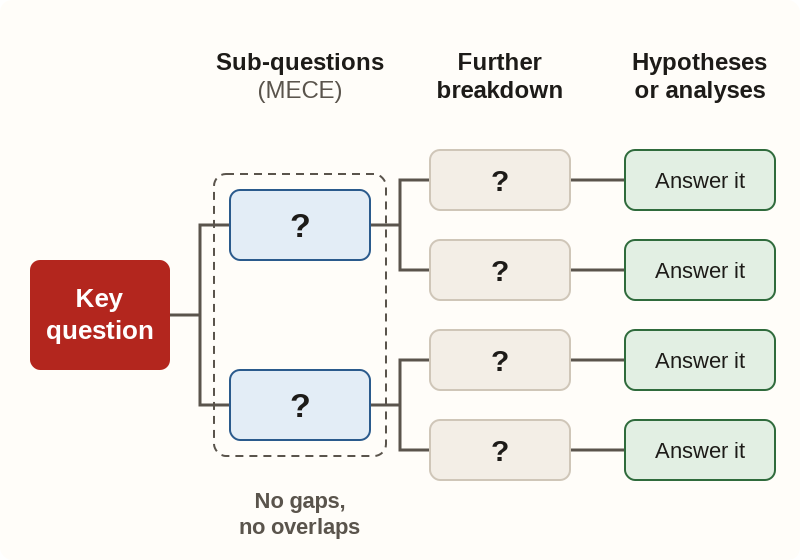
Issue Tree
Breaks a key question into smaller sub-questions until each can be answered by analysis.Read the framework →Have we covered everything, without overlap?
Test each level of the tree with MECE. The branches should not overlap, so the same cost is not counted twice, and together they should leave nothing important out, such as transition risk. Gaps here become the questions a senior reader asks in the meeting. Do not chase perfect neatness: a structure that is roughly MECE and answers the real question beats an elegant one that does not. The checked branches become the raw material for your argument.
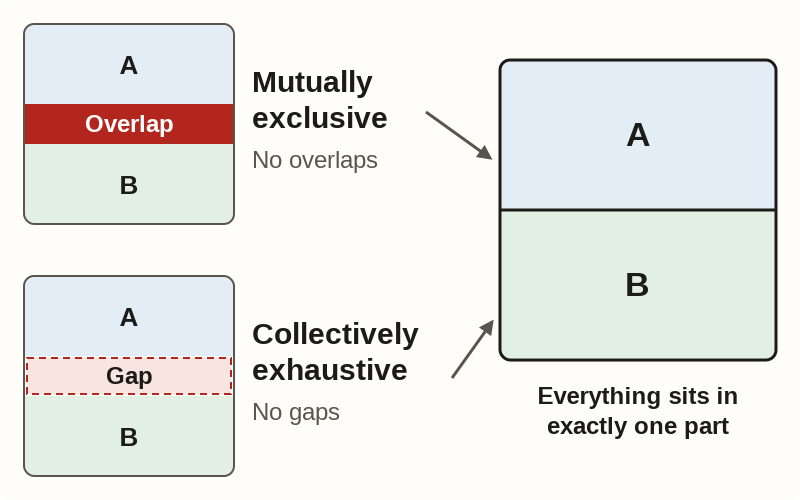
MECE
Splits a problem into parts that do not overlap and leave nothing out.Read the framework →How do we build the argument?
With the analysis done, turn the questions into an argument. The Pyramid Principle puts your answer at the top (for example, bring support in-house over the next year), with three or so key arguments beneath it, each backed by evidence. Each argument should answer the obvious question raised by the one above. Senior readers can stop once they are convinced, or dig into the detail if they are not. Drafting the pyramid early also shows quickly whether your evidence supports the answer, or whether you still have work to do.
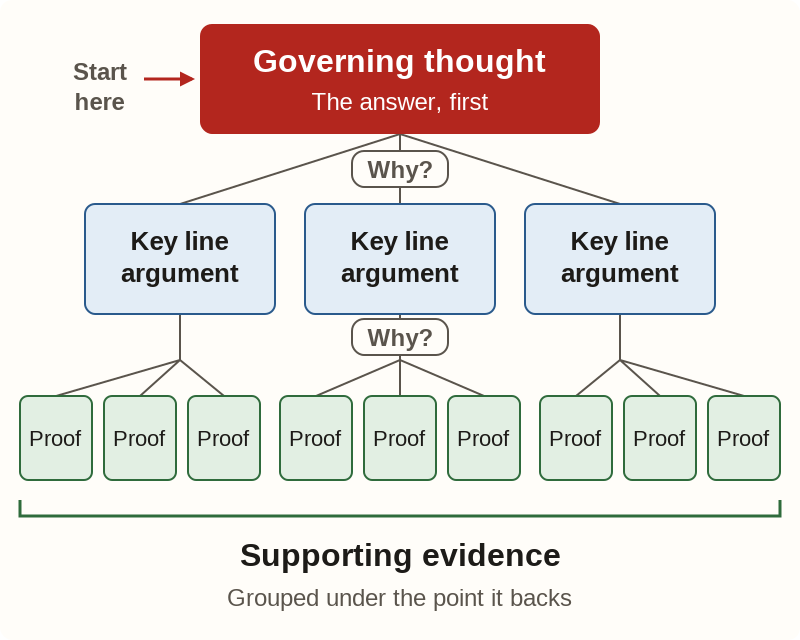
Pyramid Principle
Leads with the answer, then groups support into a logical hierarchy.Read the framework →How do we open so the reader is ready for the answer?
Leading straight with a conclusion can feel abrupt. SCQA gives you a short opening: the situation the reader already accepts, the complication that has changed it, the question that raises, and then your answer, which is the top of your pyramid. Keep the situation to a sentence or two. The same opening works for a memo, an email or the first slide of a deck. Then the body follows the pyramid you have already built.
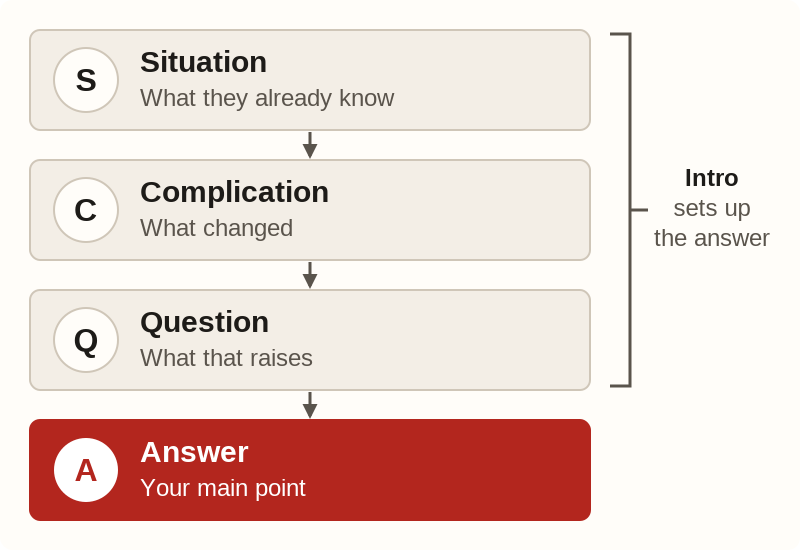
SCQA
Opens a message with situation, complication and question so the answer lands in context.Read the framework →
Read next
Making a hard decision
The options are unclear, the stakes are high and people disagree. Frame the decision, settle who decides and test the choice.
Making an investment decision
A new site, a project or an acquisition is on the table. Test whether it makes money, what it is worth today and what could go wrong.
Setting the annual strategy
It's planning season and you need a strategy, not a wish list. Go from an honest diagnosis to goals each team can act on.