Scenario
Managing an innovation portfolio
You have more ideas than money and a core business that wants it all. Balance your innovation bets, plan them and prune them.
Say you run product at a 200-person manufacturer. There is a list of projects, most of them small improvements to what you already sell, a couple of bolder bets nobody quite owns, and a budget that gets cut whenever the quarter looks tight. You need a portfolio you can explain: what you are betting on, how much, how each bet is planned, and when you stop.
Are we investing beyond next year?
Start by sorting every project by when it will pay back. Three Horizons splits the work into the core business you defend today, emerging businesses that should carry growth next, and options that may matter later. Many portfolios turn out heavy on the first horizon, because those projects have the clearest numbers and the loudest sponsors. Drawing the split on one page makes the imbalance visible before anyone argues about individual projects. Carry the horizon labels forward: they shape how much risk each bet can carry and how it should be judged.
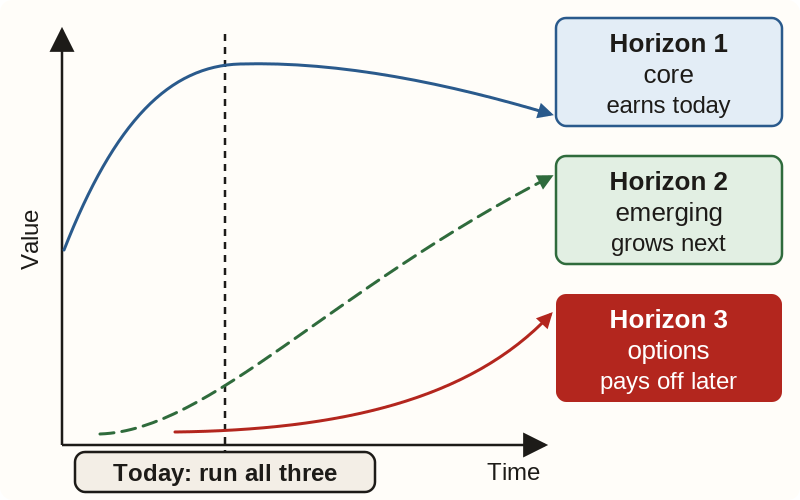
Three Horizons
Balances today's core business against emerging and future ones.Read the framework →How should the budget split across levels of risk?
Time is one axis; novelty is another. The Innovation Ambition Matrix places each project by how far it moves from your current products and customers, from core improvements through adjacent moves to transformational ones. Use it to agree a target mix with the leadership team, then compare the mix you fund. Treat any published ratio as a starting point for discussion, not a rule, since the right balance depends on your industry and how fast it is changing. The agreed mix becomes the budget envelope for the next steps.
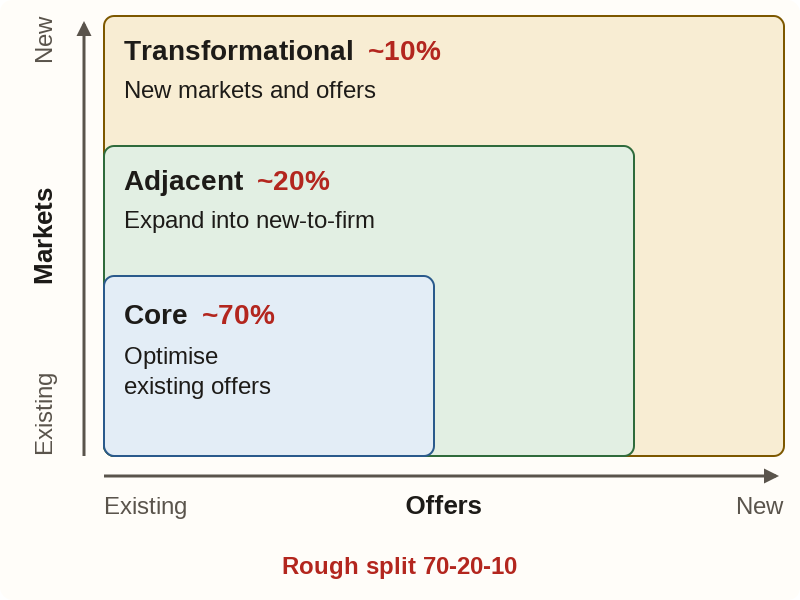
Innovation Ambition Matrix
Balances an innovation portfolio across core, adjacent and transformational initiatives.Read the framework →Which of our technologies is running out of road?
Before you fund more improvements to the core, ask whether the technology underneath it still has room to improve. The Technology S-Curve describes progress that starts slowly, speeds up and then flattens as limits approach. If your engineers are spending more for smaller gains, you may be near the top of the curve, and money is better spent on the next one. You will not know the limit for sure, so treat this as a prompt for a deliberate conversation rather than a forecast. If you are near the top, shift some budget from refining the core towards the technology that could replace it.
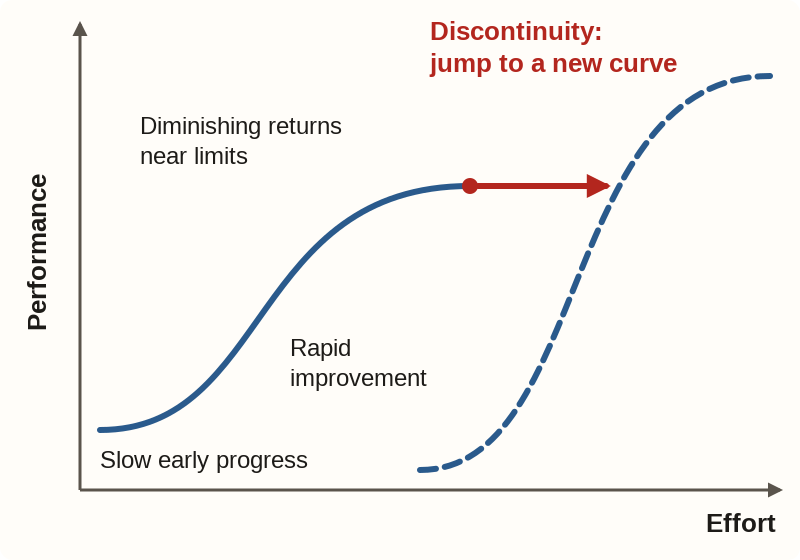
Technology S-Curve
Shows a technology's performance rising slowly, then fast, then flattening as it nears its limits.Read the framework →How do we plan the bets whose numbers are mostly guesses?
The bolder projects cannot be planned like a product refresh, because their costs and revenues are guesses. Discovery-Driven Planning starts from the profit the venture must make to be worth doing, works back to what would have to be true, and lists those assumptions. Each milestone then tests the riskiest one for the least money. This gives the adjacent and transformational bets a plan that says what you will learn by when, which is what the next step needs to judge them fairly.
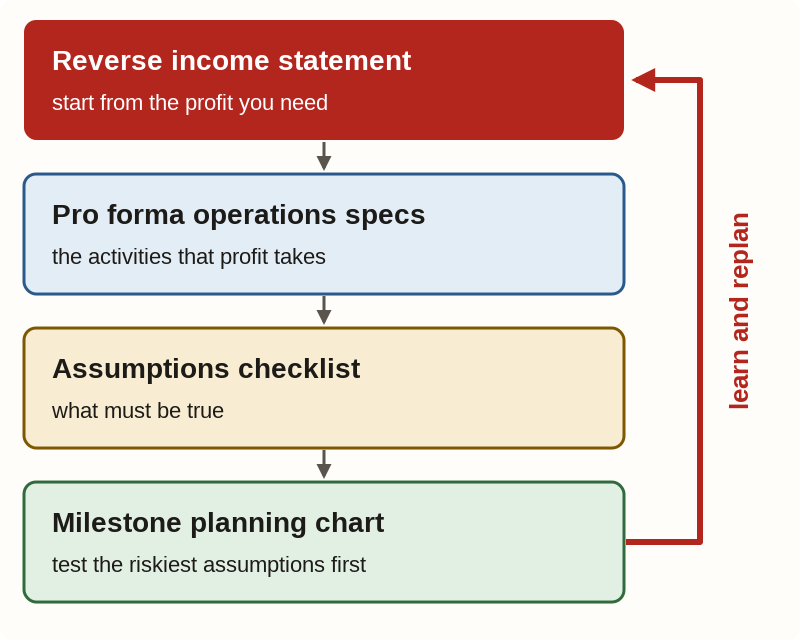
Discovery-Driven Planning
Plans a new venture backwards from the profit it must make, then tests its riskiest assumptions in turn.Read the framework →When do we fund, hold or kill a project?
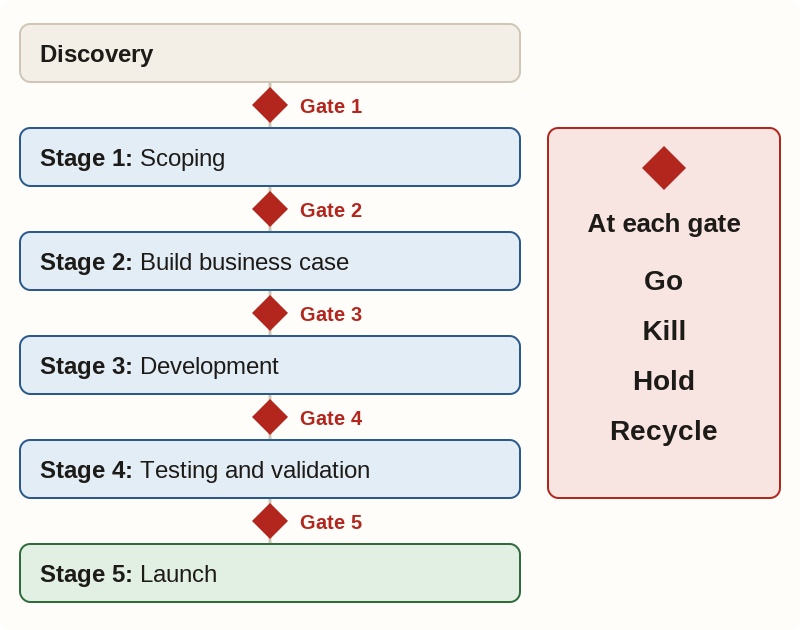
Finally, set the decision points. Stage-Gate moves projects through defined stages with a go, kill, hold or recycle decision at each gate. For core projects the gates can ask for a business case and test results. For the bolder bets, let the gate criteria come from the assumptions in the previous step: did the milestone prove what it set out to prove? Run the gates as a portfolio review, not one project at a time, so killing one bet frees money for another within the mix you agreed.
Stage-Gate
Moves new products through set stages, with a go or kill decision at a gate before each.Read the framework →
Read next
Launching a new product
You have an idea for a new product and want to launch without wasting a year. Go from customer need to a tested first version.
Making an investment decision
A new site, a project or an acquisition is on the table. Test whether it makes money, what it is worth today and what could go wrong.
Setting the annual strategy
It's planning season and you need a strategy, not a wish list. Go from an honest diagnosis to goals each team can act on.