Scenario
Scaling a start-up
Your start-up has traction and investors want growth. Judge your stage, your growth engine and your pace, and fix what will break.
Say your 25-person company has found paying customers and investors are asking how fast you can grow. What got you here, a few founders doing everything, will not get you to the next stage. This guide works through the questions in order: where you are, whether growth is healthy, how fast to go, and what will break in the organisation as you grow, so you can fix it before it does.
What stage is the business at?
Start by placing the business honestly. The Five Stages of Small Business Growth runs from existence and survival, through success, where owners choose to consolidate or grow, to take-off and resource maturity, and each stage asks different things of the owner and the systems. A firm that still depends on its founders for every sale is not yet ready for take-off, however good the numbers look. Name your stage and what the next one requires; that sets the agenda for the rest of this guide.
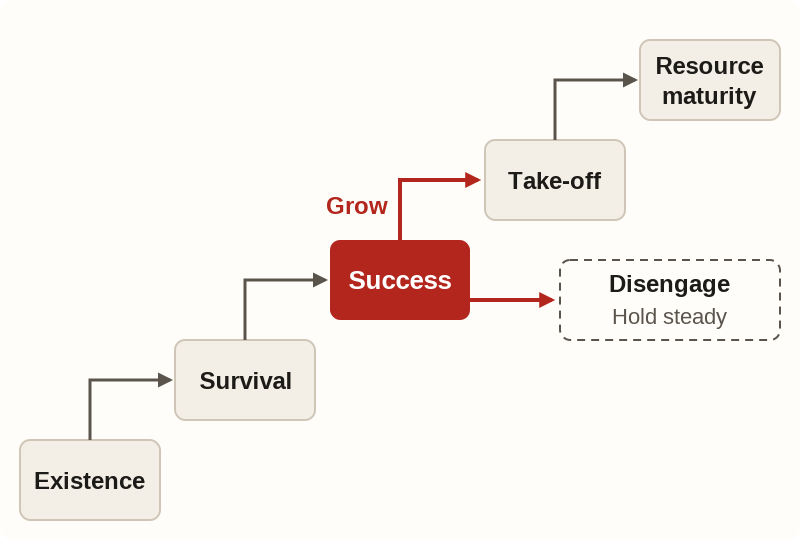
Five Stages of Small Business Growth
Describes the stages a small firm passes through, from first customers to a mature, well-resourced business.Read the framework →Where is our growth engine leaking?
Before you pour money into growth, check the funnel. Pirate Metrics (AARRR) splits it into acquisition, activation, retention, referral and revenue, each with its own measure. Scaling acquisition on top of weak retention mostly buys churn. Find the weakest stage and fix it first. Watch for knock-on effects, since a push on one stage can hurt another. A funnel that keeps the customers it wins is the base for deciding how hard to push.
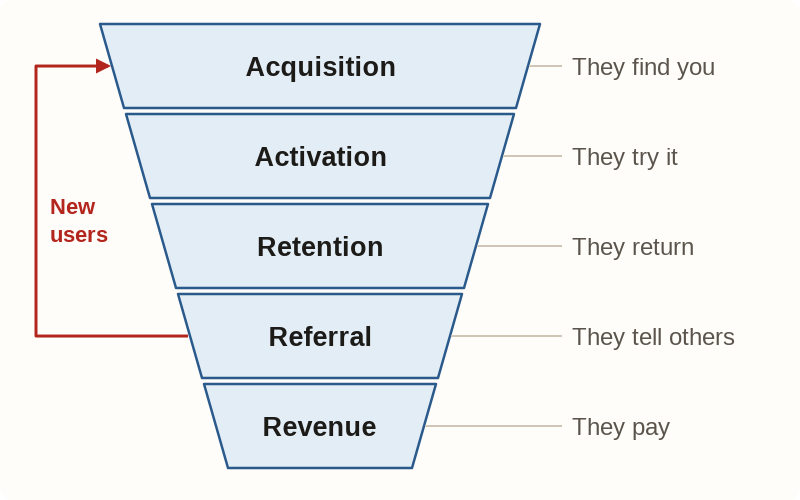
Pirate Metrics (AARRR)
Breaks a start-up's funnel into five measurable stages.Read the framework →Are we balancing growth and profit?
If you sell software, the Rule of 40 gives a quick check: revenue growth rate plus profit margin should add up to at least 40%. It is meant for software firms at scale, so at your size read it as the balance you are heading towards rather than a pass mark. Fast growth can excuse losses, and slow growth needs profit to compensate. Treat it as an investor rule of thumb rather than a target, and be clear how you measure both numbers. If you sell something else, the same question still applies: what trade-off between growth and profit can you defend to investors and to yourselves?
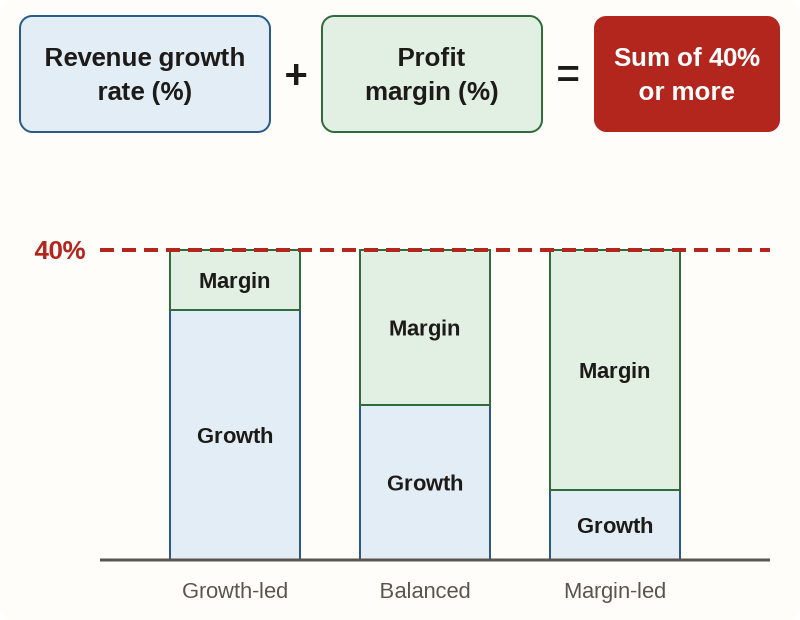
Rule of 40
Says a software company's revenue growth rate plus profit margin should add up to at least 40%.Read the framework →Should we grow faster than is efficient?
Blitzscaling argues for putting speed ahead of efficiency when being first to scale decides who wins. Ask honestly whether your market is winner-take-most, and whether you can raise and absorb the money it takes. For most firms the answer is no, and a steadier pace is the better choice. If the answer is yes, accept the costs it brings: waste, burnout and broken processes, which the next two steps help you manage.
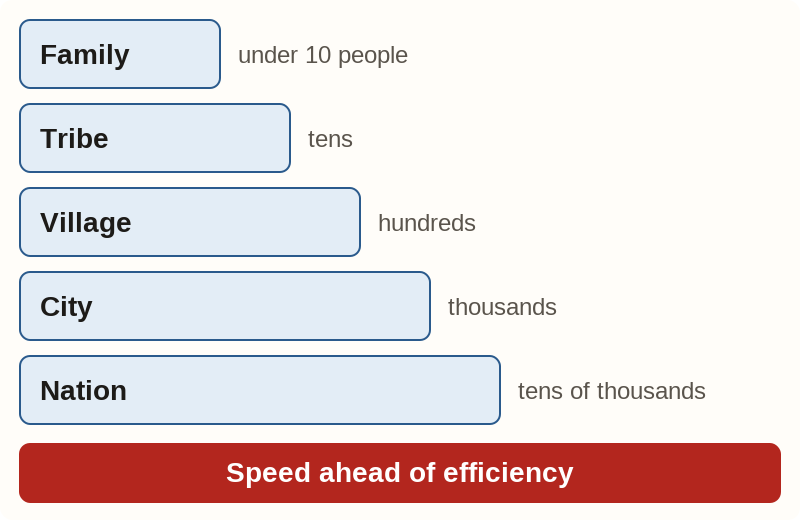
Blitzscaling
Puts speed ahead of efficiency under uncertainty to reach market-leading scale first.Read the framework →What will break as we grow?
Greiner's Growth Model describes calm phases of growth that end in a crisis: of leadership, then autonomy, then control, and so on. Use it to anticipate which crisis is coming for you. A founder-led firm heading for its first management layer usually faces a crisis of leadership. Real firms do not follow the phases neatly, but naming the likely crisis early lets you hire or restructure before it hits.
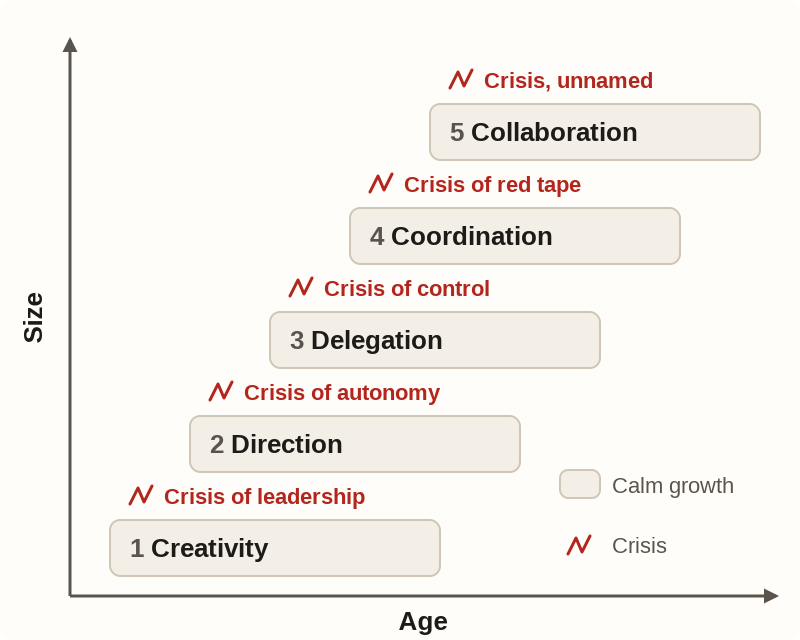
Greiner's Growth Model
Describes how growing firms pass through phases of calm growth, each ending in a crisis that forces change.Read the framework →How should we organise for the next stage?
Finally, redesign the organisation as a whole. The Galbraith Star Model treats strategy, structure, processes, rewards and people as five policies that must fit together. A new org chart alone rarely fixes a scaling crisis; rewards that still favour heroics or processes that still route everything to the founder will undo it. Check each point of the star against the stage and pace you chose earlier.
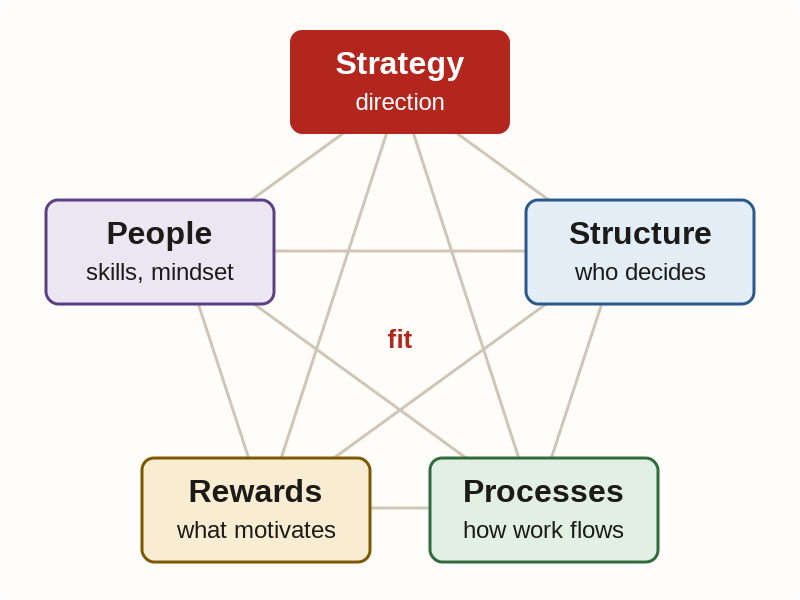
Galbraith Star Model
Treats organisation design as five policies that must fit each other and the strategy.Read the framework →
Read next
Reorganising the business
You need to change how the business is organised, and a new org chart will not do it alone. Diagnose, design and land the change.
Customers are leaving
Churn is rising and nobody agrees why. Find who is leaving, what they are worth and where the experience lets them down.
A team that isn't working
Deadlines slip, meetings go quiet and the same arguments keep coming back. Find out why, then decide what to change first.