Scrum
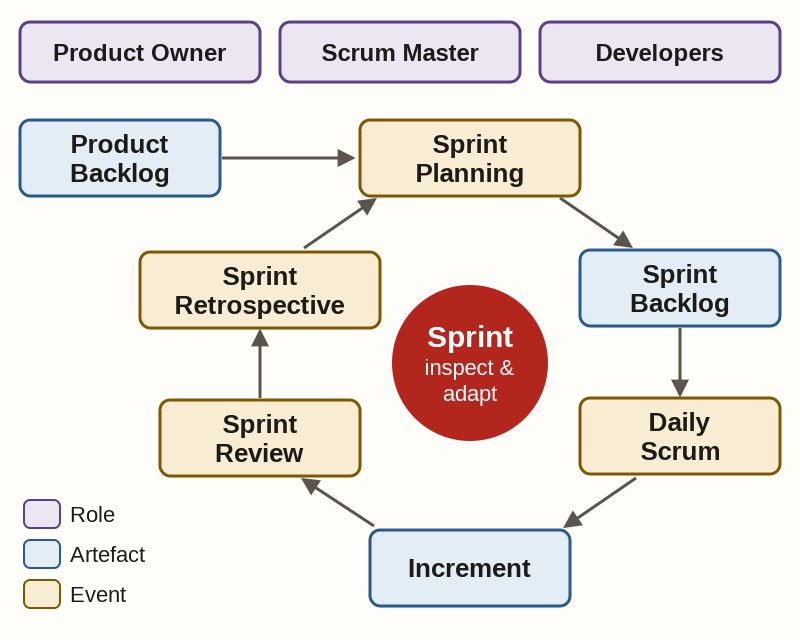
Delivers work in short fixed sprints with set roles, events and artefacts for inspection and adaptation.
Helps with
- requirements keep changing mid-project
- delivering complex work in short cycles
- team needs a rhythm for planning and reviewing
- getting working increments out regularly
Use it when
Running a team on complex work where requirements keep changing.
The parts
- Product Backlog
- Sprint Planning
- Sprint Backlog
- Daily Scrum
- Increment
- Sprint Review
- Sprint Retrospective
Watch out
Teams often adopt the ceremonies without the empowerment or customer feedback that make them work.
Where it comes from
The name comes from the rugby analogy in Takeuchi and Nonaka's 1986 HBR article 'The New New Product Development Game'; the parts here follow the 2020 Scrum Guide, which differs from the 1995 paper.
Scrum terms from The Scrum Guide, © 2020 Ken Schwaber and Jeff Sutherland, licensed under CC BY-SA 4.0. Licence (opens in a new tab)