Scenario
Running a project
You have a deadline, a budget and a sponsor watching. Agree what can flex, build a plan people can follow and spot slippage early.
Say you have been asked to move your company's customer support onto a new system within six months. There is a fixed budget, several teams involved and a sponsor who wants regular updates. Some of the work is well understood, like migrating data; some, like the new support workflows, will only become clear once people start using them. You need a plan you can defend and a way to tell early when it is slipping.
What is fixed, and what can give?
Before planning anything, agree with the sponsor which of time, cost and scope is fixed. The Iron Triangle shows that you cannot pin all three and expect quality to hold: if the date and budget are fixed, scope has to flex. Write the agreement down. It is what you will refer back to every time someone asks for an extra feature, and it tells you which parts of the plan to protect when things go wrong.
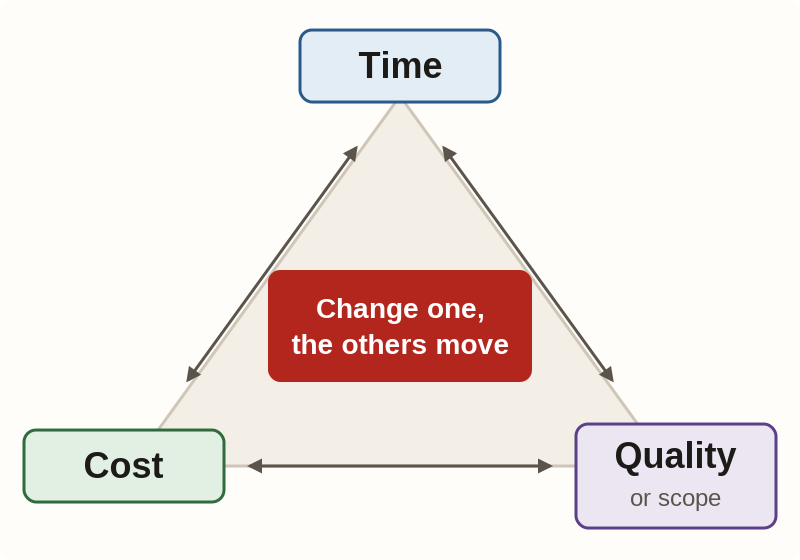
Iron Triangle (Triple Constraint)
Shows that time, cost and quality (or scope) trade off, so changing one moves the others.Read the framework →Who does what, and who signs it off?
A project that crosses several teams can fail from unclear roles as easily as from bad estimates. A RACI Matrix lists the main deliverables and, for each, who does the work, who is accountable for it, who is consulted and who is kept informed. Keep one accountable person per deliverable. The matrix also tells you whose availability the schedule in the next step depends on, which matters because people shared with day jobs are a common cause of delay.
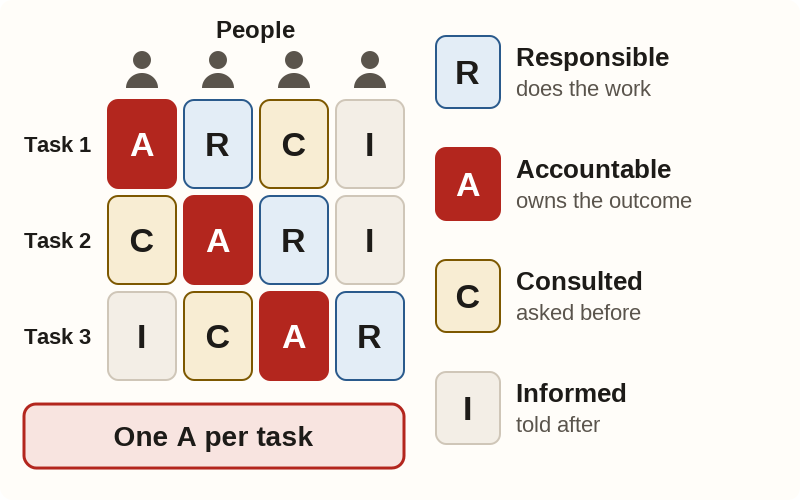
RACI Matrix
Assigns each task's roles to make ownership explicit.Read the framework →What is the shortest realistic timeline?
Now list the activities, estimate how long each takes and map which depend on which. The Critical Path Method finds the longest chain of dependent tasks, which sets the earliest possible finish, and shows how much slack the other tasks have. For the system move, the critical path probably runs through data migration and testing, not through training. Check it against the people in your RACI: if the same person sits on two critical tasks at once, the real path is longer than the calculated one.
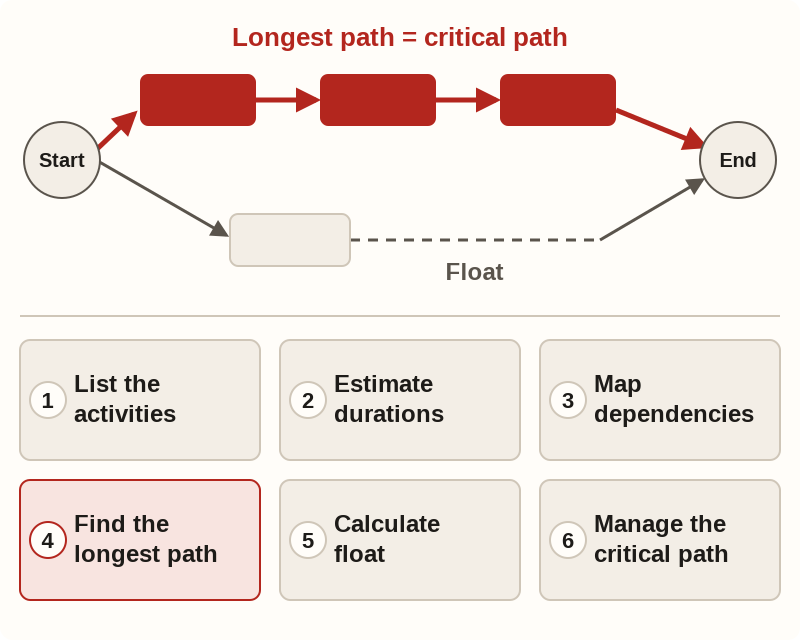
Critical Path Method (CPM)
Finds the longest chain of dependent activities, which sets the shortest possible project duration.Read the framework →How do we show the plan so people can follow it?
The sponsor and the teams need to see the plan without reading a task list. A Gantt Chart draws each task as a bar against a timeline, with dependencies, milestones and progress to date. Build it from the critical path analysis rather than drawing it freehand, so that the bars reflect real dependencies. Agree who updates it and how often; it is the picture you will use in every progress meeting from now on.
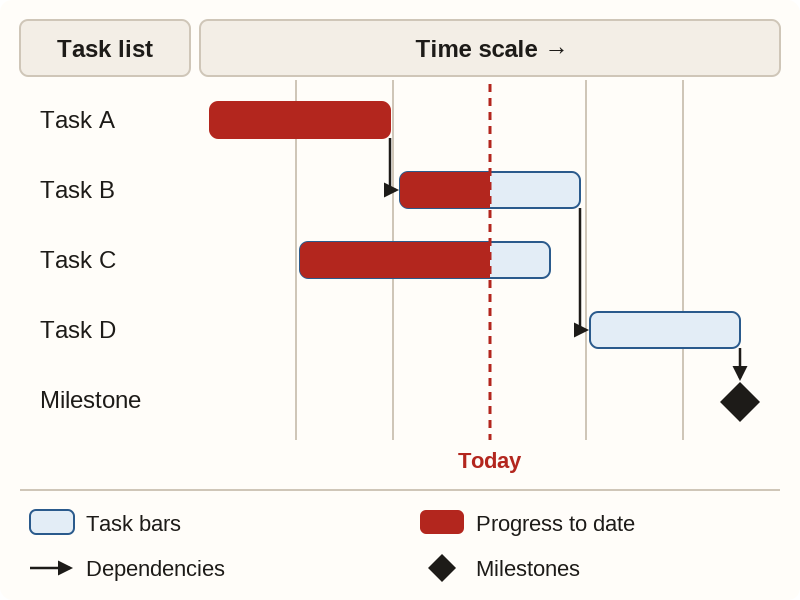
Gantt Chart
Plots tasks as bars against a timeline so plan and progress can be read at a glance.Read the framework →How do we handle the parts nobody can specify yet?
The new support workflows cannot be designed fully up front, because staff will only know what works once they try it. For that stream, Scrum offers short fixed sprints, a prioritised backlog and a review with users at the end of each sprint. Fit the sprints inside the milestones on your Gantt Chart, so the overall date holds while the content of each sprint is allowed to change. This is where the flexible side of the Iron Triangle agreement gets used.
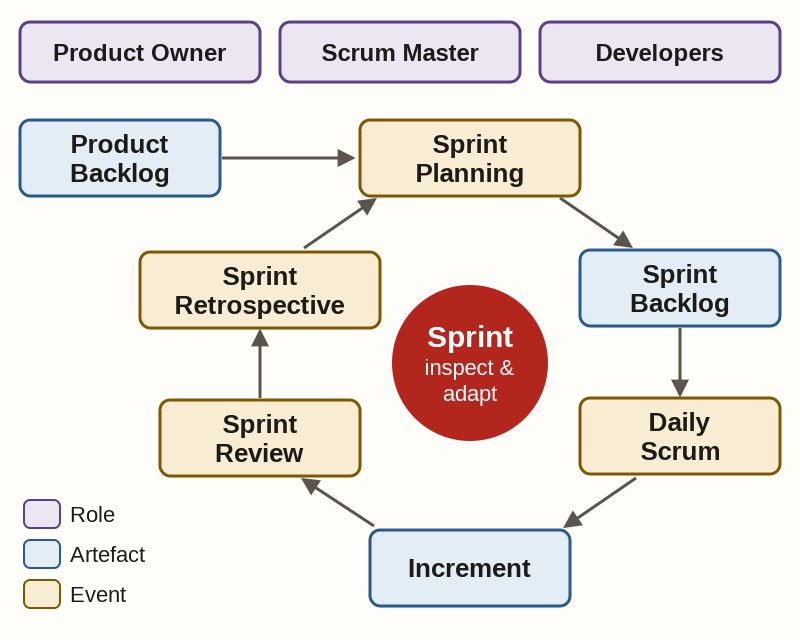
Scrum
Delivers work in short fixed sprints with set roles, events and artefacts for inspection and adaptation.Read the framework →Are we on budget and on schedule?
Finally, track progress with more than gut feel. Earned Value Management compares the planned value of work due by now, the value of work actually done and what it actually cost, giving you schedule and cost performance figures. On a project this size a simple version per milestone is enough. Report it alongside the Gantt Chart and treat a falling figure as a reason to return to the Iron Triangle conversation early, not to wait for the deadline to arrive.
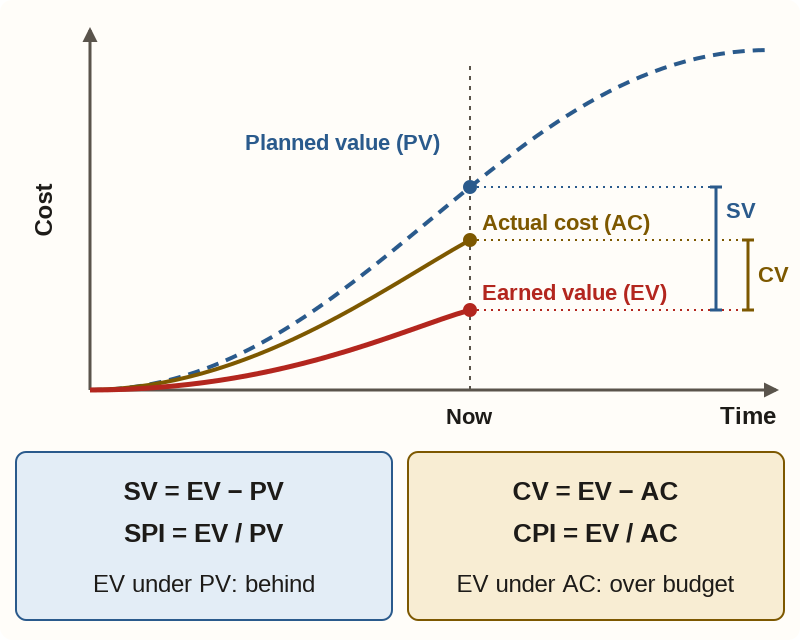
Earned Value Management (EVM)
Compares the value of work done with its planned and actual cost to measure schedule and cost performance.Read the framework →
Read next
Prioritising a roadmap or backlog
Too many requests, not enough people. Clear the pile, judge what each item is worth, sequence the work and fix the next release.
Leading a change programme
You have to move an organisation from the old way of working to a new one. Plan the change and bring people with you.
A team that isn't working
Deadlines slip, meetings go quiet and the same arguments keep coming back. Find out why, then decide what to change first.