Scenario
Prioritising a roadmap or backlog
Too many requests, not enough people. Clear the pile, judge what each item is worth, sequence the work and fix the next release.
Your backlog has hundreds of items, every stakeholder says theirs is urgent, and the roadmap changes each time someone senior visits. Prioritising is less about finding the perfect formula than about making the trade-offs visible so people can argue about them openly. This guide moves from triage, through judging customer value and scoring, to sequencing and fixing the scope of a release. You will not need every method every time.
What on this list can we drop or hand off?
Before you score anything, thin the pile. The Eisenhower Matrix sorts items by urgency and importance into do, schedule, delegate and drop. Applied to a backlog, it moves bugs and operational chores to their owners, parks long-term bets, and gives you permission to delete requests nobody will miss. The matrix will not decide what is important for you, so agree that with your stakeholders first. What remains is the real candidate list.
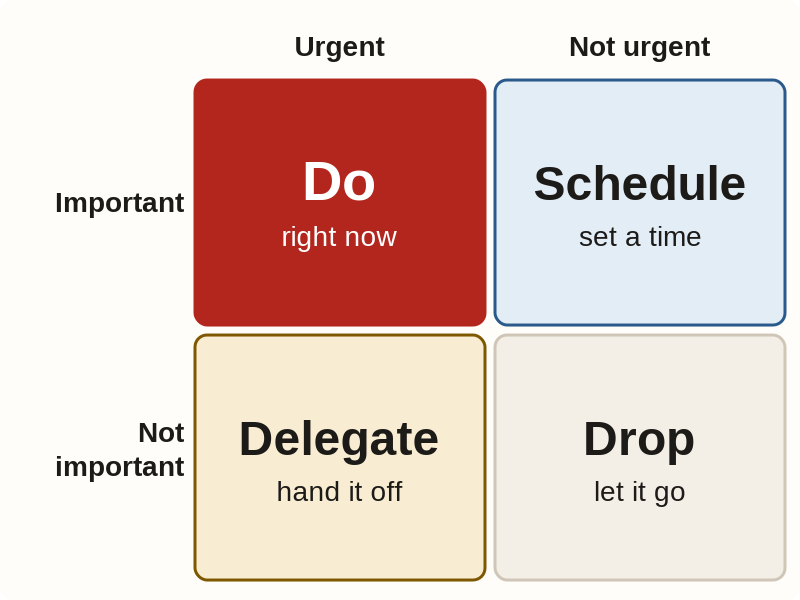
Eisenhower Matrix
Prioritises tasks by urgency and importance.Read the framework →What kind of value does each feature give customers?
Features do not all affect satisfaction the same way. The Kano Model asks whether a feature is expected, rewards more of it, delights, or leaves customers indifferent. A missing basic can sink a product however many delighters it has, so check those first. Tag each remaining candidate with its category. This keeps the scoring honest, because a high score for an indifferent feature should make you suspicious.
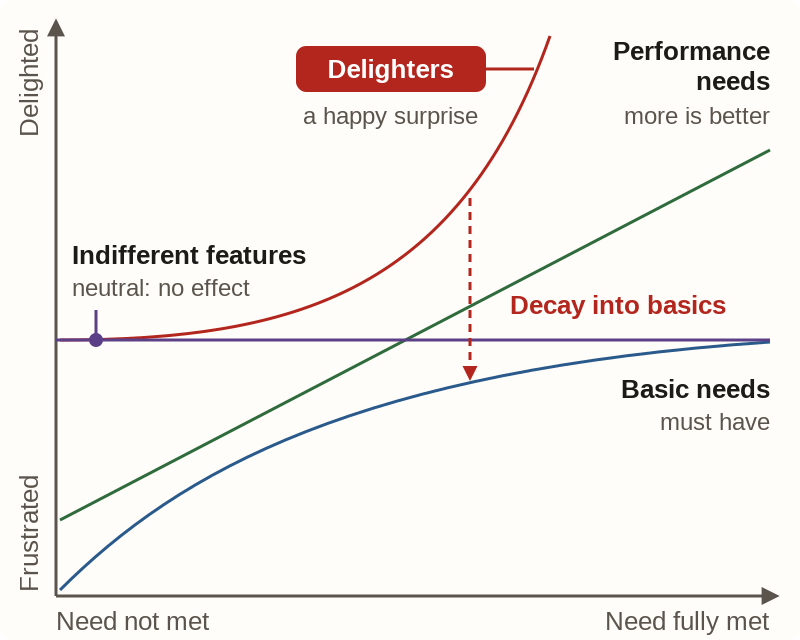
Kano Model
Classifies features by how they affect customer satisfaction.Read the framework →Which candidates give the most for the effort?
Now compare like with like. RICE Scoring rates each item by how many people it reaches, how much it helps them and how confident you are, divided by the effort it takes. It forces people to state their assumptions, which is often more useful than the final number. Keep the scores rough and argue about the inputs, not the decimals. The ranked list you get feeds straight into sequencing.
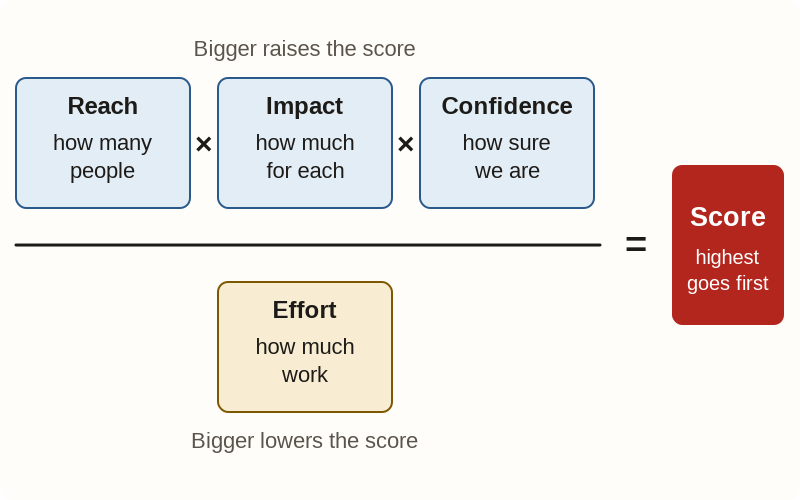
RICE Scoring
Ranks product ideas by reach, impact and confidence over effort.Read the framework →What should we build first, given what delay costs us?
A good idea that can wait is different from one that loses value every week. Weighted Shortest Job First (WSJF) orders work by its cost of delay divided by its size, so small, urgent, valuable jobs rise to the top. Use it where deadlines, contracts or market windows make timing matter; where they do not, your RICE ranking may be enough. Estimate cost of delay with the people who would feel it.
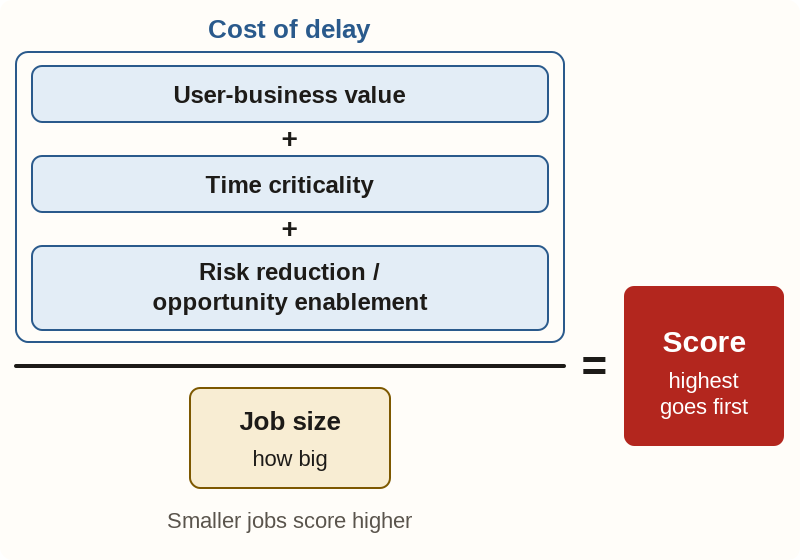
Weighted Shortest Job First (WSJF)
Orders work by its cost of delay divided by its size, so small urgent valuable jobs go first.Read the framework →What must the next release contain?
Sequencing tells you the order; a release with a fixed date also needs a fixed scope. MoSCoW Prioritisation sorts the items in that timebox into must, should, could and won't have this time. Agree a cap on the Musts before you start, or everything will drift into them. The won't list matters as much as the must list, because it tells stakeholders plainly what they are not getting yet.
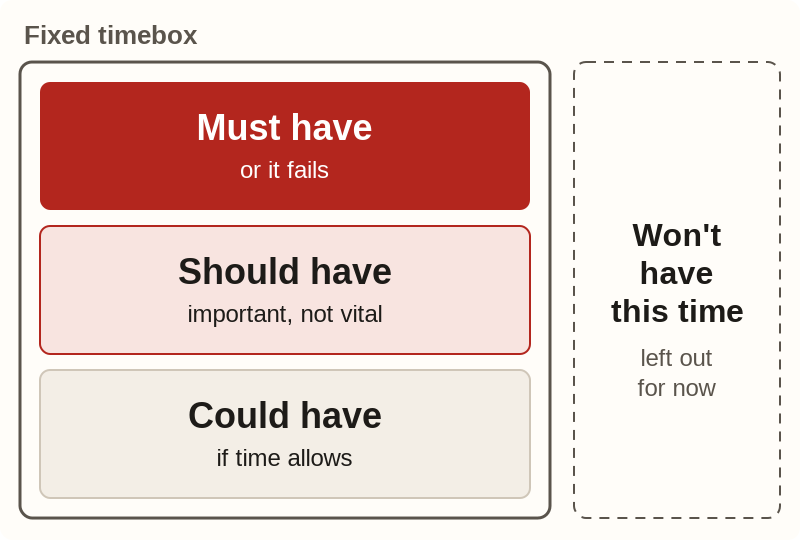
MoSCoW Prioritisation
Sorts requirements into must, should, could and won't-have-this-time to fix scope in a timebox.Read the framework →
Read next
Launching a new product
You have an idea for a new product and want to launch without wasting a year. Go from customer need to a tested first version.
Running a project
You have a deadline, a budget and a sponsor watching. Agree what can flex, build a plan people can follow and spot slippage early.
Making a hard decision
The options are unclear, the stakes are high and people disagree. Frame the decision, settle who decides and test the choice.