Discounted Cash Flow and NPV
Values an investment by discounting its expected future cash flows to today at a required rate.
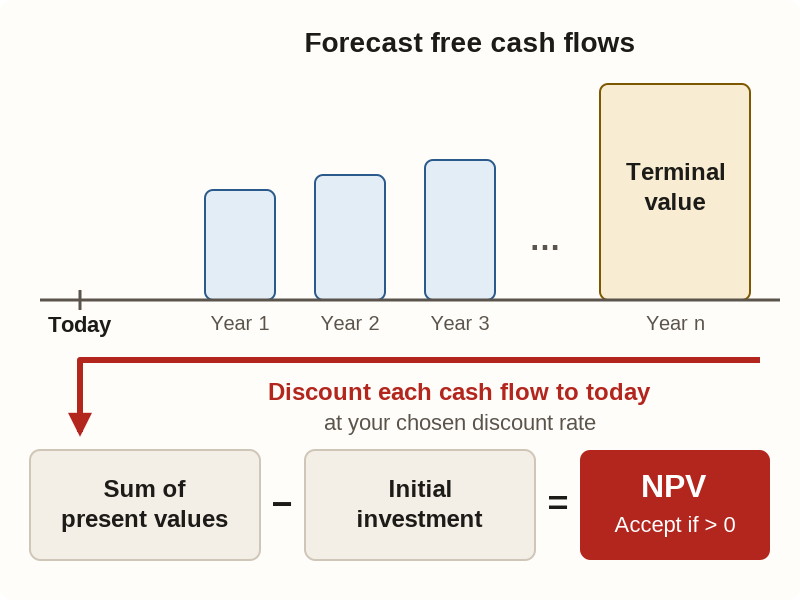
Helps with
- whether an acquisition is worth buying
- valuing an investment from future cash flows
- should we invest in this project
Use it when
Deciding whether a project or acquisition is worth its price.
The parts
- Forecast free cash flows
- Choose a discount rate
- Discount each cash flow to today
- Estimate a terminal value
- Subtract the initial investment
- Accept if NPV is above zero
Watch out
The answer is only as good as the forecasts and discount rate, and small changes to the terminal value can swing it.
Where it comes from
Discounting is much older than any one author; Fisher had set out capital value as discounted expected income by 1907, and Williams applied the method to valuing shares in The Theory of Investment Value (1938).